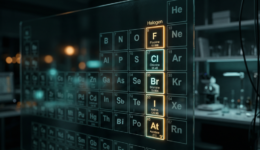
If Group 6 is about strength, Group 7 is about reactivity.
These elements – known as the halogens – are some of the most chemically active substances on the Periodic Table. Fluorine, chlorine, bromine, iodine, and astatine all share one defining trait: they’re just one electron short of stability.
That small gap makes a big difference.
Because of it, halogens are constantly looking to react, bond, and transform. And that reactivity is exactly what makes them so useful – from disinfecting water to enabling modern medicines and materials.
Key highlights
Group 7 includes fluorine (F), chlorine (Cl), bromine (Br), iodine (I), and astatine (At).
These elements are non-metals with seven valence electrons, making them highly reactive.
Reactivity decreases down the group, with fluorine being the most reactive.
Their physical state changes from gases to liquid to solid down the group.
Halogens are strong oxidising agents with high electronegativity.
They are widely used in sanitation, pharmaceuticals, plastics, and electronics.
What defines Group 7 elements?
The defining feature of halogens is simple: seven valence electrons.
That means each atom is just one electron away from a full outer shell – the stable configuration of noble gases. As a result, halogens strongly attract electrons and readily form bonds.
This gives them two key characteristics:
High reactivity
Strong oxidising ability
In their natural state, halogens exist as diatomic molecules (F₂, Cl₂, Br₂, I₂), sharing electrons to stabilise themselves.
Trends across the Group
As you move down Group 7, several clear patterns appear:
Atomic size increases.
Electronegativity decreases.
Reactivity decreases.
Melting and boiling points increase.
Physical state changes from gas → liquid → solid.
Fluorine sits at the top as the most reactive element in the entire Periodic Table. By the time you reach iodine, reactivity is noticeably lower, and astatine behaves very differently due to its radioactivity.
Fluorine: The most reactive element
Fluorine is in a category of its own.
It is the most electronegative element and reacts with almost everything – including some noble gases. Its extreme reactivity comes from its small size and strong pull on electrons.
Common uses of fluorine:
Fluoride in toothpaste and water treatment
Production of non-stick materials like Teflon
Industrial chemicals and refrigerants
It’s powerful – but also dangerous – requiring careful handling in industrial settings.
Chlorine: Essential and widely used
Chlorine is one of the most familiar halogens.
It is the most electronegative element and reacts with almost everything – including some noble gases. Its extreme reactivity comes from its small size and strong pull on electrons.
Common uses of fluorine:
Fluoride in toothpaste and water treatment
Production of non-stick materials like Teflon
Industrial chemicals and refrigerants
It’s powerful – but also dangerous – requiring careful handling in industrial settings.
Chlorine: Essential and widely used
Chlorine is one of the most familiar halogens.
Where bromine is used:
Flame retardants
Agricultural chemicals
Pharmaceuticals
Its dense, reddish-brown appearance and strong odor make it one of the more distinctive elements.
Iodine: Stable and biologically essential
Iodine is the least reactive of the common halogens – but it’s vital for life.
The human body needs iodine to produce thyroid hormones, which regulate metabolism. That’s why iodine is added to table salt in many countries.
Common uses of iodine:
Antiseptics and disinfectants
Nutritional supplements
Medical imaging and diagnostics
It also has a unique property: it sublimes from a solid directly into a purple vapor.
Astatine: Rare and radioactive
Astatine is the rarest naturally occurring halogen.
It is highly radioactive and exists only in tiny amounts. Because of this, it has no widespread practical use.
However, researchers are exploring its potential in targeted cancer treatments, where its radiation could be used to destroy tumour cells.
Physical and chemical properties
Halogens are defined by:
Low melting points (increasing down the group)
Distinct colours and states (gas → liquid → solid)
Poor electrical conductivity (non-metals)
High electronegativity
Strong oxidising behaviour
Chemically, they are extremely versatile. They form ionic bonds with metals and covalent bonds with non-metals, leading to a wide variety of compounds.
Atomic radius of Group 7 elements
Atomic radius shows a clear and predictable trend in Group 7.
As you move down the group from fluorine to astatine, the atomic radius increases steadily. This happens because each element has an additional electron shell compared to the one above it. More shells mean the outer electrons are farther from the nucleus, making the atom larger.
Even though the nuclear charge increases down the group, the effect of added electron shells and electron shielding outweighs it. As a result, the outer electrons are less strongly attracted to the nucleus.
This increase in atomic size has important effects on other properties:
It reduces electronegativity down the group.
It decreases reactivity (as atoms attract electrons less strongly).
It weakens the oxidising power of the elements.
In short, the growing atomic radius is one of the key reasons why fluorine is extremely reactive, while iodine and astatine are much less so.
Halogens form some of the most important compounds in chemistry:
Sodium chloride (NaCl) – table salt
Hydrogen chloride (HCl) – forms hydrochloric acid
Hypochlorite (bleach) – disinfectant
Fluorocarbons – used in materials and refrigerants
They also form organic compounds, such as PVC and pharmaceuticals, where halogens modify chemical behaviour and stability.
Natural occurrence and extraction
Halogens are never found in pure form due to their reactivity.
Instead, they occur as compounds:
Fluorine → fluorite (CaF₂)
Chlorine → rock salt and seawater
Bromine → brines
Iodine → seaweed and mineral deposits
Extraction methods include:
Electrolysis (for chlorine and fluorine)
Chemical displacement (for bromine and iodine)
Industrial importance
Halogens are deeply embedded in modern life:
Chlorine ensures clean water and sanitation.
Fluorine enables advanced materials and coatings.
Bromine improves fire safety.
Iodine supports healthcare and nutrition.
They are essential across industries including healthcare, manufacturing, energy, and electronics.
Biological role and safety
Some halogens are essential in small amounts:
Iodine supports thyroid function.
Fluoride strengthens teeth.
But safety is critical.
Many halogens – or their compounds – can be toxic in certain forms. For example:
Chlorine gas is harmful if inhaled.
Hydrofluoric acid is highly corrosive.
Excess iodine can disrupt hormone balance.
Proper handling and controlled use are essential.
Why Group 7 matters
Group 7 elements are defined by one thing: their drive to react.
That reactivity makes them powerful tools – capable of disinfecting water, building materials, and enabling life-saving medicines.
They’re not just reactive for the sake of it. They’re reactive with purpose.
And once you understand that, the Periodic Table starts to feel less like a chart – and more like a system that explains how chemistry shapes the world around us.
Frequently asked questions
Why are halogens so reactive? Because they have seven valence electrons and need just one more to reach a stable configuration.
How does reactivity change down Group 7? It decreases. Fluorine is the most reactive, while iodine and astatine are less reactive.
What are common uses of halogens? Water treatment (chlorine), dental care (fluoride), electronics and materials, and medical applications.
Are halogens dangerous? They can be, especially in pure or concentrated forms. However, in controlled amounts, many are essential and widely used safely.
Some elements don’t just sit on the Periodic Table – they define entire industries. Group 6 is one of those cases.
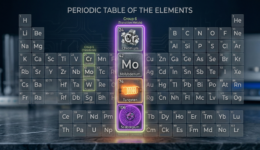
This group includes chromium, molybdenum, tungsten, and the synthetic element seaborgium. Together, they represent some of the toughest, most heat-resistant materials known. From stainless steel and industrial catalysts to high-temperature alloys and advanced research, these elements are built for extremes.
What makes Group 6 especially interesting is how structure translates directly into function. Their electron configurations give them strength, stability, and chemical flexibility – qualities that show up in everything from construction materials to cutting-edge technology.
Group 6 includes chromium (Cr), molybdenum (Mo), tungsten (W), and the synthetic element seaborgium (Sg).
These elements are transition metals known for strength, density, and extremely high melting points.
They commonly exhibit multiple oxidation states, with +6 becoming more stable down the group.
Chromium is essential for stainless steel and corrosion resistance.
Molybdenum and tungsten are critical for high-temperature and high-strength applications.
Seaborgium exists only in laboratories and is used for advanced scientific research.
What defines Group 6 elements?
Group 6 elements share a common electronic foundation: partially filled d-orbitals. This gives them the flexibility to form multiple oxidation states and participate in a wide range of chemical reactions.
One unusual feature of this group is its electron configuration. Chromium and molybdenum don’t follow the expected pattern – they adopt a more stable half-filled d-subshell. It’s a small detail, but it has a noticeable impact on their chemistry.
Another defining trait is their ability to form strong metallic bonds. This leads to exceptional hardness, high density, and resistance to heat – properties that make these elements indispensable in demanding environments.
Trends across the group
As you move down Group 6, several clear patterns emerge:
Atomic size increases, though less dramatically than expected.
Density rises significantly, with tungsten among the densest metals.
Melting and boiling points increase sharply.
The +6 oxidation state becomes more stable.
Reactivity decreases slightly, especially for tungsten.
These trends help explain why tungsten dominates high-temperature applications, while chromium is more reactive and widely used in everyday materials.
Chromium: Corrosion resistance and strength
Chromium is the most familiar member of Group 6 – and one of the most widely used.
Its standout feature is corrosion resistance. When exposed to air, chromium forms a thin oxide layer that protects the metal beneath. This is what makes stainless steel resistant to rust.
Where chromium is used:
Stainless steel production
Chrome plating for durability and appearance
Superalloys used in turbines and engines
South Africa plays a major role globally as one of the largest producers of chromium, making it a key material in the global steel industry.
Molybdenum: Strength at high temperatures
Molybdenum is less visible than chromium but just as important.
It improves the strength and heat resistance of steel, making it essential for pipelines, heavy machinery, and aerospace components. It also performs well under pressure and extreme temperatures.
Chemically, molybdenum is highly versatile, which makes it valuable as a catalyst – especially in petroleum refining, where it helps remove sulfur from fuels.
Key uses of molybdenum:
High-strength steel alloys
Catalysts in refining and chemical processing
Emerging semiconductor materials (MoS₂)
It also plays a biological role as a trace element in enzymes, making it one of the few transition metals essential to life.
: Extreme heat, extreme performance
Tungsten is the heavyweight of the group.
It has the highest melting point of any metal, making it the go-to material for extreme heat applications. If something needs to survive thousands of degrees, tungsten is usually involved.
Common applications of tungsten:
Heating elements and high-temperature furnaces
Cutting tools and drill bits (as tungsten carbide)
Aerospace and defence components
Radiation shielding and counterweights
Its density and hardness also make it useful beyond temperature resistance – it’s one of the most durable materials available.
Seaborgium: Science at the limits
Seaborgium is entirely different from the rest of the group.
It doesn’t exist naturally and can only be created in particle accelerators. It is highly unstable, with a short half-life, which means it has no practical applications.
Instead, its importance lies in research. Studying seaborgium helps scientists understand how superheavy elements behave and how far the Periodic Table can extend.
Physical and chemical properties
Group 6 elements are defined by:
High density and strength
Extremely high melting and boiling points
Strong metallic bonding
Paramagnetic behaviour due to unpaired electrons
Good (but not exceptional) electrical conductivity
Chemically, they are highly versatile. Their ability to adopt multiple oxidation states – especially +6 – allows them to form a wide range of compounds, from oxides to halides.
Important compounds and reactions
Group 6 elements form several industrially important compounds:
Chromium oxides used in pigments and coatings.
Molybdenum disulfide (MoS₂), a key lubricant and emerging semiconductor.
Tungsten oxides used in catalysts and smart materials.
Tungsten hexafluoride (WF₆), used in semiconductor manufacturing.
These compounds are central to industries ranging from construction to electronics.
Natural occurrence and extraction
These elements are not found in pure form and must be extracted from ores:
Chromium → chromite
Molybdenum → molybdenite
Tungsten → wolframite and scheelite
Extraction typically involves converting ores into oxides, followed by reduction to pure metal.
South Africa dominates chromium production, while China leads in tungsten output. Molybdenum is often recovered as a byproduct of copper mining.
Industrial importance
Group 6 elements are essential to modern infrastructure and technology:
Chromium enables corrosion-resistant steel.
Molybdenum strengthens materials and supports clean fuel production.
Tungsten enables high-temperature engineering and tooling.
Together, they support industries like construction, energy, aerospace, and manufacturing.
Biological role and safety
Chromium and molybdenum are essential trace elements in small amounts:
Chromium supports glucose metabolism.
Molybdenum helps enzymes process nutrients.
However, form matters. While dietary chromium (Cr³⁺) is safe, industrial hexavalent chromium (Cr⁶⁺) is toxic and carcinogenic.
Exposure risks are mainly industrial, with strict safety controls required.
Why Group 6 matters
Group 6 elements are the backbone of materials that need to perform under pressure – literally.
They make steel stronger, engines more durable, electronics more advanced, and industrial processes more efficient. Even seaborgium, with no practical use, expands our understanding of atomic structure.
Taken together, this group shows how the Periodic Table isn’t just theoretical – it’s deeply practical. It shapes the materials we rely on every day and the technologies that define the future.
Frequently asked questions
Why are Group 6 elements considered transition metals? Because they have partially filled d-orbitals, allowing them to form multiple oxidation states and complex compounds.
What are common uses of Group 6 elements? Chromium is used in stainless steel, molybdenum in alloys and catalysts, and tungsten in high-temperature applications and cutting tools.
Why is tungsten so important? It has the highest melting point of any metal, making it essential for extreme heat environments.
Does seaborgium have any real-world uses? No. It is used only in scientific research to study superheavy elements.
The Periodic Table isn’t just a chart – it’s a map of how materials behave. And tucked into Group 5 is a set of elements that quietly power some of the toughest, most demanding applications in modern technology.
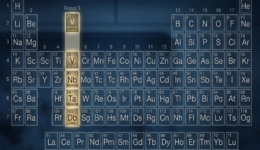
This group includes vanadium, niobium, tantalum, and the lab-created dubnium. At first glance, they might seem similar – they sit in the same column, share electron structures, and behave like classic transition metals. But look closer, and each one plays a very different role.
From strengthening steel and enabling superconductors to powering electronics and pushing the limits of scientific discovery, Group 5 elements are built for extremes.
Key Highlights
Group 5 includes vanadium (V), niobium (Nb), tantalum (Ta), and the synthetic element dubnium (Db)
These elements share five valence electrons, leading to a dominant +5 oxidation state
Vanadium, niobium, and tantalum are refractory metals with high heat and wear resistance
Vanadium is unique for its biological role and multiple oxidation states
Niobium and tantalum are critical in aerospace, superconductors, and electronics
Dubnium exists only in laboratories and is used for advanced scientific research
What defines Group 5 elements?
Group 5 elements share a defining feature: five valence electrons arranged in their outer orbitals. This structure drives much of their chemistry, especially their tendency to form compounds in the +5 oxidation state.
Like many transition metals, they also form protective oxide layers when exposed to air. These layers act as a barrier against corrosion, making the metals stable even in harsh environments.
Another defining trait is their classification as refractory metals. Vanadium, niobium, and tantalum can withstand extremely high temperatures without losing strength, which makes them ideal for aerospace, industrial, and high-performance applications.
Shared trends across the group
As you move down Group 5, several patterns emerge:
Melting points remain extremely high
Atomic size increases, but niobium and tantalum are nearly identical due to lanthanide contraction
Chemical reactivity is low at room temperature due to oxide passivation
The +5 oxidation state becomes more stable
These shared trends explain why the elements behave similarly in some contexts – while still allowing for important differences in real-world applications.
Vanadium: Versatile and unexpected
Vanadium stands out as the most flexible element in the group.
It can exist in multiple oxidation states (+2 to +5), which allows it to form a wide range of compounds – many of them brightly coloured. This versatility makes it especially useful in chemical reactions and catalysis.
But what really sets vanadium apart is its biological role. It appears in certain enzymes and even in marine organisms, making it the only Group 5 element with a known function in living systems.
Where vanadium is used:
Strengthening steel for construction, tools, and vehicles
Aerospace alloys for high-temperature performance
Industrial catalysts, especially in sulfuric acid production
South Africa is one of the world’s leading producers of vanadium, making it a strategically important material both locally and globally.
Niobium: Lightweight strength and superconductivity
Niobium brings a different advantage: strength without excessive weight.
It is the least dense of the refractory metals in Group 5, which makes it valuable in aerospace and structural applications. Even small amounts added to steel can dramatically improve strength and durability.
Niobium also has a high-tech side. When alloyed, it becomes superconductive at low temperatures, making it essential for MRI machines and particle accelerators.
Superconducting magnets for medical and research equipment
Aerospace components requiring heat resistance and low weight
Tantalum: Built for corrosion and electronics
Tantalum is all about stability.
It is highly resistant to corrosion – so much so that it can withstand most acids. This makes it invaluable in chemical processing and extreme environments.
But its biggest impact is in electronics. Tantalum capacitors are small, reliable, and efficient, making them essential for smartphones, laptops, and other compact devices.
It’s also biocompatible, which allows it to be used safely in medical implants.
Common applications of tantalum:
Electronic components (especially capacitors)
Medical implants and surgical tools
Chemical processing equipment
Dubnium: Science at the edge
Dubnium is a different kind of element altogether.
It doesn’t exist in nature and can only be created in particle accelerators – atom by atom. Its isotopes decay quickly, giving scientists only a short window to study them.
Because of this, dubnium has no industrial use. Its value lies entirely in research, helping scientists understand the behaviour of superheavy elements and the limits of the Periodic Table.
Natural occurrence and extraction
Vanadium, niobium, and tantalum are found in mineral deposits, often together, which makes extraction complex.
Vanadium is commonly obtained from titaniferous magnetite ores
Niobium is primarily extracted from pyrochlore
Tantalum is sourced from coltan (columbite-tantalite)
Separating niobium and tantalum is particularly difficult due to their chemical similarity. Advanced techniques like solvent extraction are used to isolate them.
Dubnium, by contrast, is entirely synthetic and produced in extremely small quantities in laboratory settings.
Why Group 5 matters
Group 5 elements don’t get as much attention as some others – but they’re essential to modern life.
They strengthen the materials we build with, enable technologies we rely on, and support industries that operate under extreme conditions. From infrastructure and aerospace to electronics and medicine, their impact is everywhere.
And then there’s dubnium – reminding us that the Periodic Table isn’t finished. It’s still expanding, still being explored.
Understanding Group 5 isn’t just about memorising elements – it’s about seeing how chemistry shapes the technologies that define our world.
What makes Group 5 elements refractory metals? Vanadium, niobium, and tantalum are classified as refractory metals because of their extremely high melting points, strength at high temperatures, and resistance to wear and corrosion.
What are common uses of Group 5 elements? Vanadium strengthens steel, niobium is used in high-strength alloys and superconductors, and tantalum is widely used in electronics and medical implants.
Why is dubnium important if it has no practical uses? Dubnium helps scientists study the behaviour of superheavy elements, improving our understanding of atomic structure and the limits of the Periodic Table.
There’s something quietly magical about a classroom moment when learners lean in, eyes wide, and say, “Wait… do that again.”
The humble pepper-and-water activity has exactly that effect. It’s simple, a little theatrical, and – most importantly – packed with scientific meaning.
As we approach World Hand Hygiene Day on 5 May, it offers South African Physical Science or Natural Sciences teachers a perfect opportunity to connect curriculum concepts with real-world relevance.
At first glance, the setup couldn’t be easier. A shallow bowl, some water, a sprinkle of black pepper. The pepper rests lightly on the surface, almost as if it’s been carefully placed there one grain at a time.
Ask a learner to dip a clean finger into the centre and… nothing much happens. Maybe a few flakes cling to their skin, but the surface remains mostly undisturbed.
Then comes the twist.
Add a drop of dish soap to the finger and try again. Instantly, the pepper shoots outward, racing to the edges of the bowl as though it’s been startled. A clear space opens in the middle, and just like that, your classroom has gone from mildly curious to fully engaged.
What’s powerful about this demonstration is not just the visual drama, but the layers of science sitting beneath it. On one level, it’s a beautiful illustration of surface tension. Water molecules cling to one another through cohesion, forming a kind of invisible “skin” on the surface. This is strong enough to support the pepper, which, being hydrophobic, doesn’t mix with the water and simply floats.
Introduce soap, however, and that delicate balance is disrupted. Soap molecules are surfactants – surface-active agents designed to interfere with those cohesive forces. As the soap spreads, it breaks the hydrogen bonds between water molecules. The water, in response, pulls away from the soap, dragging the pepper along for the ride.
What learners are seeing is not just movement, but a molecular tug-of-war playing out in real time.
And this is where the practical activity becomes more than just a Physics or Chemistry demo – it becomes a story about hygiene.
In the context of handwashing, soap plays a far more critical role than simply “making things clean.” Many viruses, including those learners have become all too familiar with in recent years, are surrounded by a lipid bilayer – a fatty envelope that protects them. Soap molecules, with their hydrophilic heads and lipophilic tails, are perfectly designed to break this structure apart. The tails wedge themselves into the lipid layer, destabilising it, and ultimately tearing the virus open.
Of course, the pepper doesn’t represent germs in a literal sense. It doesn’t dissolve or get destroyed. But as a metaphor, it’s incredibly effective. Learners can see that soap doesn’t just passively rinse things away – it actively disrupts the environment.
For South African classrooms, where practical demonstrations can sometimes be limited by resources, this practical activity is a gift. It’s low-cost, quick to set up, and adaptable across different phases. Whether you’re introducing intermolecular forces in Physical Sciences or exploring basic hygiene concepts in Natural Sciences, it slots in seamlessly.
A useful tip: lean into the storytelling. Tell your learners the pepper represents germs, and ask them to predict what will happen before you add the soap. Let them be surprised. That moment of surprise is often where the real learning begins.
As World Hand Hygiene Day approaches, this small practical activity offers a big message. Science isn’t just something that happens in textbooks or laboratories – it’s in the everyday actions we sometimes take for granted. And sometimes, all it takes is a bowl of water, a pinch of pepper, and a drop of soap to make that clear.
Practical Activity
Aim: To test if soap has the power to physically manipulate and disrupt the environment where germs live.
Apparatus:
Shallow bowl or plate
Water
Black pepper
Dishwashing soap
Method:
The Setup: Fill a shallow bowl or plate with water and sprinkle a layer of black pepper across the surface. The pepper floats because it is light and the surface tension of the water holds it up.
The Touch: Dip a clean finger into the centre. Nothing happens – the pepper stays put (and might even stick to your finger).
The Magic: Rub a small drop of dishwashing soap on your finger and touch the centre of the water again.
Observation:
The pepper instantly “races” to the edges of the plate, leaving a clear circle of water in the middle.
The Science (The “Why”)
There are actually two scientific principles at play here that Doc Scientia learners would find fascinating:
Surface Tension (Physical Sciences)
Water molecules are very attracted to one another (cohesion). On the surface, they cling together to form a “skin.” Because pepper is hydrophobic (water-fearing), the water doesn’t wet it, and the surface tension allows the flakes to float.
The Role of the Surface-active substance (Chemistry)
Soap is a surface-active agent. Its primary job is to break the surface tension of the water.
As the soap moves through the water, it breaks the hydrogen bonds between water molecules.
The water molecules want to keep their surface tension intact, so they pull away from the soap, carrying the pepper flakes with them to the edges of the bowl.
Why use this for Hand Hygiene Day?
While the pepper practical activity shows water moving away, it visually demonstrates how soap breaks a barrier.
In the case of a virus, that “barrier” is the lipid bilayer. Just like the soap forces its way into the water surface, the lipophilic (fat-loving) tails of soap molecules force their way into the fatty envelope of a virus and tear it open.
At first glance, the Periodic Table can feel like a grid you memorise and move on from. But look a little closer at Group 4, and things get interesting fast.
This small column – titanium, zirconium, hafnium, and the lab-made rutherfordium – punches far above its weight. These elements show up in jet engines, nuclear reactors, medical implants, and even the microchips inside your phone.
What ties them together isn’t just where they sit on the table – it’s how they behave. Thanks to their electron structure, Group 4 elements are tough, stable, and remarkably resistant to corrosion. In other words, they’re built for extreme conditions.
In this guide, we’ll break down what makes these elements unique, why zirconium and hafnium are often called “chemical twins,” and how this group quietly powers some of the most advanced technologies we rely on.
Key highlights
Group 4 includes titanium (Ti), zirconium (Zr), hafnium (Hf), and the synthetic element rutherfordium (Rf)
These elements share a common electron structure, which drives their preference for a stable +4 oxidation state
Titanium, zirconium, and hafnium are exceptionally strong and corrosion-resistant thanks to a self-forming protective oxide layer
Zirconium and hafnium are chemically almost identical – but behave in completely opposite ways inside nuclear reactors
From aerospace and medical implants to nuclear energy and microchips, Group 4 elements are built for extreme environments
Rutherfordium exists only in laboratories and helps scientists explore the limits of the Periodic Table
What defines Group 4 elements?
Group 4 elements share a common foundation: they each have four valence electrons – two in the s-orbital and two in the d-orbital. That detail might sound small, but it drives almost everything about how they behave.
Because of this structure, these elements strongly prefer a +4 oxidation state. It’s their most stable form, and it appears consistently in their compounds – from titanium dioxide in paint to zirconium alloys in nuclear reactors.
They also form a thin, protective oxide layer when exposed to air. This layer acts like a shield, preventing corrosion. That’s why titanium can function inside the human body, and why zirconium performs reliably in extreme industrial environments.
Zirconium and hafnium: The almost-indistinguishable pair
If there’s one standout quirk in Group 4, it’s the relationship between zirconium and hafnium.
Despite being far apart in atomic number, they are nearly identical in size. This is due to something called the lanthanide contraction, which effectively “shrinks” hafnium’s atomic radius to match zirconium’s.
The result? Chemically, they behave almost the same-and are notoriously difficult to separate in nature.
But in nuclear applications, that similarity disappears:
Zirconium barely absorbs neutrons, making it ideal for fuel rod cladding
Hafnium absorbs neutrons extremely well, making it perfect for control rods
Same size. Similar chemistry. Completely opposite roles.
Physical and chemical properties
Group 4 elements are strong, dense metals with high melting points and excellent durability. Titanium stands out for its low density and high strength-to-weight ratio, while hafnium is significantly denser.
They are also refractory metals, meaning they can withstand extremely high temperatures without breaking down. Their strong metallic bonding contributes to both their hardness and thermal stability.
Chemically, their behavior is dominated by the +4 oxidation state. While titanium can also form +3 compounds, zirconium and hafnium almost exclusively remain in the +4 state. Their resistance to corrosion comes from the oxide layer that forms naturally on their surface.
How Group 4 elements are used in the real world
What makes Group 4 elements so valuable isn’t just their chemistry – it’s how reliably they perform under pressure. Heat, corrosion, and radiation are environments where most materials fail. Group 4 metals don’t.
Titanium: strength without the bulk
Titanium is as strong as steel but significantly lighter, making it essential in aerospace engineering. It’s used in aircraft frames, jet engines, and high-performance equipment.
Because it’s biocompatible, titanium is also widely used in medical implants like joint replacements and dental fixtures.
Its compound, titanium dioxide (TiO₂), is just as important – found in paints, sunscreens, and everyday products as a bright white pigment and UV blocker.
Zirconium: Built for extreme environments
Zirconium is highly resistant to corrosion, making it ideal for use in chemical processing equipment exposed to harsh substances.
Its most critical role, however, is in nuclear reactors. Zirconium alloys are used to encase fuel rods because they do not absorb neutrons, allowing reactions to proceed efficiently while maintaining safety.
Hafnium: Small element, big impact
Hafnium plays a crucial role in both nuclear technology and electronics.
In reactors, it absorbs neutrons, allowing it to control nuclear reactions. In electronics, hafnium oxide is used in advanced microchips, enabling smaller, faster, and more efficient processors.
Rutherfordium: Science at the edge
Rutherfordium is not found in nature and exists only for fractions of time in laboratory conditions. It has no commercial use.
Its importance lies in research. By studying rutherfordium, scientists gain insight into the behavior of superheavy elements and the limits of the Periodic Table.
Natural occurrence and extraction
Titanium, zirconium, and hafnium are found in mineral deposits, often in heavy sands. They are never found in pure form and require complex extraction processes.
Titanium is typically extracted using the Kroll process, which converts ores into titanium metal through chemical reduction.
Zirconium is obtained from zircon minerals and must be carefully separated from hafnium due to their chemical similarity. Hafnium is produced as a byproduct of this process.
Why Group 4 matters
Group 4 elements may not be the most talked about, but they are essential to modern life.
They enable lighter aircraft, safer nuclear energy, advanced electronics, and critical medical technologies. Even rutherfordium, with no practical application, expands our understanding of science itself.
The more you look at this group, the clearer it becomes: the Periodic Table isn’t just a chart – it’s a blueprint for how the world is built.
Exceptional corrosion resistance and neutron transparency.
Hafnium
2233°C
Massive neutron absorption; essential for electronics.
Rutherfordium
~2100°C (est.)
Purely for scientific discovery; highly radioactive.
Frequently asked questions
How can I easily identify transition metals on the Periodic Table?
You can easily identify transition metals on the Periodic Table by looking at the large central block of elements, known as the d-block. These d-block elements, spanning Groups 3 through 12, are defined by having partially filled d orbitals. Their atomic number ranges from 21 (Scandium) to 112 (Copernicium).
What are the most important uses of titanium, zirconium, and hafnium in everyday life?
The most important uses include titanium in aerospace parts and medical implants due to its strength and corrosion resistance. Zirconium is crucial for nuclear reactor components and durable ceramics. Hafnium is vital for nuclear control rods and as an alloy in superalloys for jet engines, as well as in microelectronics.
Why is rutherfordium (Rf) classified as a transition metal?
Rutherfordium (atomic number 104) is classified as a transition metal because of its predicted electron configuration. It is expected to have valence d electrons, placing it in the d-block of the Periodic Table, directly below hafnium in Group 4. This electronic structure dictates its chemical behavior as a transition metal.
The most important changes or shift in focus in the 2025 Exam Guidelines for Grade 10 and 11 Physical Sciences
The 2025 updates to the Annual Teaching Plans (ATPs) and Exam Guidelines for Grades 10–12 don’t rewrite the curriculum. It is rather a stabilisation of the post-COVID/ATP adjustments. The change is: cover less content, but do it with deeper understanding.
Let’s unpack what this really means in the classroom.
From content coverage to concept mastery
If you’ve ever felt pressured to “rush through the syllabus,” you’re not alone. CAPS has always been content-heavy, and for years, teachers have had to balance depth with pace. The ATP adjustments — particularly those stabilised post-COVID and reflected in the 2025 guidelines — aim to ease that pressure.
Some content has been removed or shifted between grades. But this is not about making the subject easier. It’s about making space for deeper thinking.
In practical terms, this means:
Fewer topics competing for time.
More emphasis on understanding, not just exposure
Greater expectation that learners can apply what they know.
So instead of asking, “Have I covered everything?”, the better question becomes: “Can my learners use what we’ve covered?”
A noticeable shift in cognitive demand
The weighting of cognitive levels hasn’t dramatically changed on paper — but its implementation has.
Across Grades 10–12, exams now consistently reflect:
±15% Recall
±35–40% Understanding
±35–40% Application
±10% Evaluation
But here’s the real shift: the feel of the paper.
Questions increasingly:
Combine multiple concepts.
Require interpretation of data or graphs.
Demand reasoning, not just recall.
That familiar one-line definition question? It’s becoming rare. Instead, learners are asked to interpret, explain, compare, or even critique.
The rise of practical and experimental contexts
Another strong trend is the integration of practical science into written exams.
You’ll notice more questions built around:
Experimental setups
Identification of variables
Error analysis and reliability
Graph interpretation
This aligns closely with the skills section in all three grade guidelines — which has always been there, but is now more visible in assessment.
In other words, practical work is no longer just for SBA. It’s examinable thinking.
Formulas are given — Thinking is not
With formula sheets provided, memorisation is no longer the barrier. Instead, learners are expected to:
Choose the correct formula
Manipulate it where necessary
Apply it in unfamiliar contexts
This is especially evident in Physics across all grades, where multi-step calculations are becoming standard rather than exceptional.
A learner who knows a formula but doesn’t understand when or how to use it will struggle.
Clearer boundaries: What is NOT assessed
One of the most helpful — and often overlooked — changes is the clearer indication of what is not emphasised in exams.
The 2025 Exam guidelines, aligned with the ATPs, reduce unnecessary detail and content overload. This gives teachers a sharper focus:
Less time spent on low-priority content
More time reinforcing core concepts
Used properly, this can significantly improve teaching efficiency.
Understanding the three pillars: CAPS, ATP, and Exam Guidelines
A common mistake is relying too heavily on just one document. Each serves a different purpose:
CAPS: The full curriculum — what exists in the subject
ATP: The teaching plan — what to teach and when
Exam Guidelines: The assessment focus — what and how is actually assessed.
If CAPS is the map and the ATP is the route, then the Exam Guidelines are the destination.
And in reality, they are the closest thing we have to the “true curriculum” for exams.
What this means for your teaching
The implications are clear, even if they require a mindset shift.
Teaching now needs to prioritise:
Conceptual understanding over rote learning
Application over repetition
Interpretation over recall
Classroom strategies that align well with this shift include:
Working through real exam-style questions regularly
Using graphs, data sets, and experiments as teaching tools — not just assessment tools.
Encouraging learners to explain their reasoning, not just give answers
The bottom line
The 2025 Exam Guidelines updates are not about doing less work — they’re about doing more meaningful work.
Less content. More thinking. Less memorising. More understanding.
For teachers, this is both a challenge and an opportunity. It asks more of our learners — but also gives us permission to slow down, go deeper, and teach in a way that actually builds scientific thinking.
And in the long run, that’s a shift worth making.
You can access the official Department of Basic Education Physical Sciences Examination Guidelines for each grade below. These are the exact documents used to guide assessment and should be your primary reference when planning for exams: Grade 10 (2025 Examination Guidelines), Grade 11 (2025 Examination Guidelines), and Grade 12 (2021 NSC Examination Guidelines). We’ve made them available on the Doc Scientia website for easy download, so you can work directly from the most relevant and up-to-date assessment guidance.
Transition metals are a large group of elements located in the d-block of the Periodic Table.
These metals, identified by their atomic number, exhibit unique physical properties like high melting points and densities.
They have various important uses, from industrial catalysts to components in electronic devices.
Transition metals are distinct from rare earth elements, though they share some similar properties.
Elements like scandium and yttrium are often classified as a transition metal and a rare earth element.
Their discovery and classification have evolved over time with advances in science and technology.
If you’ve ever glanced at the Periodic Table and paused at the big block in the centre, you’ve already met the transition metals – you just might not have known their name.
These elements are everywhere. They’re in the steel holding up buildings, the copper running through your walls, and the tiny components powering your phone. Quietly, they’re doing most of the heavy lifting in modern life.
What makes them so useful comes down to something you can’t see: the way their electrons are arranged. That structure gives them unusual flexibility – letting them form strong alloys, act as catalysts, and take part in reactions other elements simply can’t handle.
In this guide, we’ll break down what transition metals are, how they’re organised in the Periodic Table (especially the often-debated Group 3), and why they matter so much in industries ranging from construction to clean energy.
What makes transition metals different?
At a glance, transition metals might just look like another group of elements – but chemically, they behave very differently from the rest of the Periodic Table.
The key lies in their electron structure. Transition metals have partially filled d-orbitals, which gives them a kind of built-in flexibility. Unlike elements that stick to one stable form, these metals can shift between different oxidation states depending on the reaction they’re involved in.
That’s a big deal.
It’s what allows iron to form both Fe²⁺ and Fe³⁺ ions. It’s why many transition metals create vividly coloured compounds. And it’s what makes them incredibly effective as catalysts – speeding up chemical reactions without being consumed in the process.
You can see the effects of this everywhere:
Iron in construction
Platinum in catalytic converters
Copper in electrical wiring
This same flexibility also explains why some elements – like scandium and yttrium – don’t fit neatly into one category. They sit in the transition metals group but behave a lot like rare earth elements, which is where things start to get interesting (and a bit messy).
In short, transition metals aren’t just defined by where they sit on the Periodic Table – they’re defined by how adaptable they are.
Group 3 elements: Where things get complicated
Most of the Periodic Table is tidy and predictable. Group 3 is not.
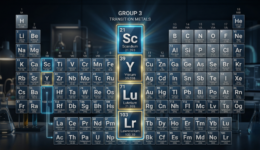
This small set of elements – scandium (Sc), yttrium (Y), and either lutetium (Lu) or lanthanum (La), depending on who you ask – sits right at the boundary between the transition metals and the rare earth elements. And that’s where the confusion begins.
Scandium and yttrium are firmly placed in the d-block, which makes them transition metals by definition. But chemically, they behave a lot like rare earth elements. They’re typically found in the same mineral deposits, and almost always form ions with a +3 oxidation state.
So which are they, really?
The honest answer: a bit of both.
Why Group 3 doesn’t fit neatly
Most transition metals are known for their flexibility – they can adopt multiple oxidation states and participate in a wide range of reactions. Group 3 elements are different.
They’re much more consistent.
Scandium and yttrium almost exclusively form +3 ions. That puts them chemically closer to the lanthanides (the rare earth elements), which also stick to a +3 state in most situations.
This overlap is why you’ll often see scandium and yttrium included in discussions about rare earths, even though they technically belong to the transition metals.
The lutetium vs lanthanum debate
Things get even more interesting when you look at the third slot in Group 3.
Some Periodic Tables list:
Scandium (Sc)
Yttrium (Y)
Lanthanum (La)
Actinium (Ac)
Others prefer:
Scandium (Sc)
Yttrium (Y)
Lutetium (Lu)
Lawrencium (Lr)
The disagreement comes down to how you prioritise electron configuration versus chemical behaviour. Lutetium fits more cleanly with the d-block structure, while lanthanum aligns better with historical and chemical trends.
There isn’t universal agreement, and that’s part of what makes Group 3 so interesting – it’s one of the few places where the Periodic Table still sparks real debate.
A bridge between two worlds
In many ways, Group 3 acts as a bridge.
It connects the d-block transition metals with the f-block rare earth elements, both structurally and chemically. This is why elements like scandium feel like they belong to two families at once.
And while that might seem like a technical detail, it actually matters. This overlap influences how these elements are mined, classified, and used in modern technologies – from aerospace alloys to advanced electronics.
So if the Periodic Table looks clean and orderly at first glance, Group 3 is a reminder that nature doesn’t always follow neat categories.
Rare earth elements vs. transition metals: What’s the real difference?
It’s easy to mix up rare earth elements and transition metals – especially since elements like scandium and yttrium seem to belong to both groups. But the core difference between them is surprisingly simple. It all comes down to where their electrons sit.
Transition metals fill their d-orbitals. Rare earth elements fill their f-orbitals. That small shift in electron structure leads to big differences in how they behave.
Transition metals are versatile. They can adopt multiple oxidation states, form a wide variety of compounds, and often act as catalysts in chemical reactions. This is why elements like iron, copper, and platinum are so widely used across industries.
Rare earth elements, on the other hand, are much more consistent. Most of them prefer a +3 oxidation state and behave very similarly to one another. That similarity is actually a challenge – it makes them difficult to separate during extraction, which is a big part of why they’re considered “rare.”
Why the confusion exists
The overlap mostly comes from scandium and yttrium.
They are technically transition metals based on their position in the Periodic Table. But chemically, they behave like rare earth elements – and they’re often found in the same mineral deposits.
Because of this, they’re frequently grouped with rare earths in industrial and economic contexts, even if that’s not strictly accurate from a chemistry standpoint.
A practical way to think about it
If you want a quick way to keep the two groups straight:
Transition metals are chemically flexible and widely used in structural materials, electronics, and catalysts
Rare earth elements are chemically similar to each other and critical for high-tech applications like magnets, lasers, and clean energy systems
Both groups are essential – but for very different reasons.
Understanding that difference makes the Periodic Table feel a lot less like a chart to memorise, and more like a system that actually explains how the material world works.
Aerospace: Used in high-performance components for military aircraft, like the MiG-21 and MiG-29.
Sports Equipment: Found in lightweight, high-strength bicycle frames, baseball bats, and lacrosse sticks.
High-Intensity Lighting: Scandium iodide is used in metal-halide lamps to produce a light source that resembles natural sunlight.
Fuel Cells: Scandium oxide is used to stabilise zirconia in solid oxide fuel cells, improving their efficiency and durability in clean energy technologies.
Yttrium (Y): Properties and practical roles
The properties of yttrium compounds are intermediate between those of aluminum and scandium. It is a key ingredient in various advanced materials and technologies due to its unique characteristics. Its compounds are used as phosphors, giving the red color in old CRT television screens.
Yttrium has several important practical roles, including:
Lasers: Yttrium-aluminum garnet (YAG) is a widely used crystal in lasers.
Medical Technology: Yttrium oxide is used to stabilise zirconia in medical implants and is found in some cancer treatments. It is not directly used in MRI machines, but other rare earths are.
Camera Lenses: Yttrium oxide can be used to make high-quality, shock- resistant camera lenses.
Superconductors: It was a component in the first high-temperature superconductors ever discovered.
Lawrencium (Lr): Properties and practical roles
Lawrencium has no known practical, industrial, or biological roles outside of scientific research. Its significance is purely academic.
Nuclear Physics Research: Used to study the properties of superheavy elements, test models of nuclear stability, and define the limits of the periodic table.
Relativistic Chemistry Studies: Its anomalous electron configuration makes it a key subject for testing relativistic quantum chemistry theories.
Isotope Studies: Research focuses on isotopes 256Lr (27 s) and 260Lr (2.7 min) for chemical experiments.
South Africa’s role in transition metal production
South Africa holds a uniquely important position in the global production of several key transition metals. The nation’s wealth of natural resources is concentrated in the Bushveld Igneous Complex, a massive geological formation that contains some of the richest ore deposits on the planet.
This region is the world’s largest source of platinum-group metals (PGMs), including platinum, palladium, and rhodium. These metals are critical for catalytic converters in vehicles. South Africa is also a leading producer of chromium, which is essential for making stainless steel, and manganese, another key component in steel production.
The country’s ability to mine and process these valuable resources makes it a crucial player in the global supply chain for many industries. South Africa's contribution ensures the steady availability of these essential transition metal elements, which are foundational to modern manufacturing and technology.
Key mining techniques
A variety of mining techniques are used to extract transition metals and rare earth elements from the ground. The method chosen depends on the type of deposit, its depth, and the concentration of the desired metal. Open-pit mining is common for large, near-surface deposits, while underground mining is used for deeper ore bodies.
Once the ore is mined, the extraction process begins. This typically involves crushing and grinding the rock, followed by chemical processing to separate the valuable metals. Techniques like froth flotation, leaching with acids, and electrowinning are used to isolate and purify the metals.
These mining and extraction processes can have significant environmental impacts. Issues like water pollution from chemical runoff, habitat destruction, and the generation of large amounts of waste rock (tailings) are major concerns. Furthermore, improper disposal of electronic waste can lead to hazardous materials leaching into the environment, highlighting the need for sustainable practices and recycling.
Abundance in earth’s crust
The abundance of transition metals in the Earth’s crust varies widely. Iron is the fourth most abundant element overall, making up about 5% of the crust. This makes it readily available and relatively inexpensive. Other transition metals like titanium and manganese are also quite common.
In contrast, some transition metals like gold and platinum are extremely rare, which contributes to their high value. The concentration of an element is just as important as its overall abundance. For a deposit to be economically viable, the metal must be concentrated enough to make extraction worthwhile.
Interestingly, many rare earth elements are more abundant in the Earth’s crust than some transition metals. For example, cerium is more common than copper. The “rarity” of REEs comes from their dispersion and the difficulty of separating them from each other, not their lack of presence in the crust.
Extraction and processing
Getting transition metals and rare earth elements from raw ore into a usable form is a complex, multi-step process. The journey involves extraction from the rock, followed by extensive refinement and purification to achieve the desired purity. Each step requires specialised chemical and engineering techniques.
These processes are not without their challenges, including significant environmental considerations. Let’s explore the techniques used for extraction and processing, and the environmental impact that comes with them.
Techniques for extraction
The extraction of transition metals and rare earth elements from their ores is a chemically intensive process. After mining and crushing the rock, the minerals are typically subjected to a process called leaching. This involves using strong chemicals, often acids like sulfuric acid or hydrochloric acid, to dissolve the desired metals out of the ore, creating a chemical solution.
For rare earth minerals, this step is particularly challenging because all the REEs tend to dissolve together. Once the metals are in solution, they must be separated from other impurities and, in the case of REEs, from each other.
To produce metallic scandium, for instance, scandium oxide is first converted to scandium fluoride. This compound is then reduced using metallic calcium in a high- temperature reaction to produce pure scandium metal. Different transition metals require different chemical pathways, but the general principle of chemical separation and reduction is common.
Refinement and purification
After initial extraction, the metals are still in a relatively impure state and must undergo refinement and purification. This is a critical step to produce metals with the specific properties required for high-tech applications. The methods used depend on the metal and the level of purity needed.
For many transition metals, processes like electrolysis or fractional distillation are used. In electrolysis, an electric current is passed through a solution containing the metal ions, causing the pure metal to deposit on an electrode. This is a common method for purifying copper.
The refinement of rare earth elements is particularly difficult due to their chemical similarity. The process often involves complex and repetitive techniques like solvent extraction or ion exchange chromatography. These methods exploit subtle differences in the properties of the REE ions to gradually separate them, one by one. This lengthy and costly purification process is a major reason for the high price of individual REEs.
Environmental considerations
The extraction and processing of transition metals and rare earth minerals come with significant environmental considerations. The extensive use of toxic chemicals, such as strong acids and organic solvents, can lead to severe water pollution if not managed properly. These substances can contaminate local water sources, harming ecosystems and human health.
Mining operations also generate massive amounts of waste, including tailings (the leftover rock after extraction) which can contain radioactive materials, particularly in rare earth mining. The disposal of this waste is a major challenge. Furthermore, the energy- intensive nature of these processes contributes to greenhouse gas emissions.
The growing mountain of electronic waste adds another layer to the problem. Discarded electronics contain valuable metals, but improper disposal releases hazardous substances into the environment. Promoting recycling and developing more sustainable extraction methods are crucial steps to mitigate these environmental issues.
South African case studies
South Africa is the world’s largest resource of platinum-group metals (PGMs), which are essential for catalytic converters that reduce harmful emissions from vehicles. The extraction processes used here are highly sophisticated, tailored to the unique geology of the region.
The mining industry in South Africa has had to innovate to overcome challenges, including deep ore bodies and complex mineralogy. Companies have developed specialised smelting and refining techniques to separate the various PGMs – platinum, palladium, rhodium, and others – from each other and from other base metals like nickel and copper.
These metals are not only vital for the automotive industry but also for emerging clean energy technologies. Platinum, for example, is a key catalyst in hydrogen fuel cells.
South Africa&’s role as a primary supplier of these critical transition metals positions it at the forefront of both traditional and future-facing industries.
Conclusion
Transition metals sit at the centre of the Periodic Table – and, in many ways, at the centre of modern life. Their unique electron structures give them a level of flexibility that few other elements can match, which is why they show up everywhere from construction materials to cutting-edge technologies.
Group 3 highlights just how complex this part of the Periodic Table can be. Elements like scandium and yttrium don’t fit neatly into one category, blurring the line between transition metals and rare earth elements. That overlap isn’t just a technical detail – it shapes how these materials are classified, sourced, and used in real-world applications.
And while rare earth elements aren’t truly “rare,” they are difficult to extract and refine, making them strategically important – especially as demand grows for clean energy technologies, electronics, and advanced manufacturing. Taken together, these elements tell a bigger story. The Periodic Table isn’t just a chart – it’s a map of how materials behave, interact, and ultimately power the world around us.
Understanding transition metals is one small step toward understanding that much larger system.
Frequently asked questions
Are rare earth elements really rare in the Earth’s crust? No, most rare earth elements are not geologically rare in the Earth's crust. For example, cerium is more abundant than copper. The term “rare” refers to the fact that these rare metals are seldom found in economically mineable concentrations and are difficult to separate from one another.
How are transition metals used in modern technology? Transition metals are vital in modern technology. They are used in electronics (copper wiring), alloys (steel), clean energy technologies like wind turbines and fuel cells, and medical equipment such as MRI machines. Their unique properties make them essential for countless advanced applications.
What is the difference between transition metals and rare earth elements?
The main difference lies in their electron configurations. Transition metals fill their d- orbitals, while rare earth elements fill their f-orbitals. This leads to different chemical behaviours, though some elements like scandium and yttrium share similar properties and are often grouped with both.
This guide provides a detailed look at the Physics CAPS curriculum for South African learners in Grade 10 – 12.
The Further Education and Training (FET) phase, starting in Grade 10, marks a significant step up in your academic journey.
Physical Sciences is a key elective subject that opens doors to many future career paths.
Success in your final years depends on using resources like past exam papers and memos for effective revision.
The curriculum builds foundational knowledge toward the National Senior Certificate.
Introduction
Welcome to your guide for navigating the Physical Sciences curriculum in South Africa! If you’re a Grade 10 or 11 learner, you know that these years are crucial for building a strong academic foundation. Physical Sciences, especially Physics, can be challenging but also incredibly rewarding. This guide is here to help you understand the CAPS framework, what you’ll be learning, and how you can use available resources to succeed. Let’s get you prepared for a future of exciting possibilities.
Overview of Physics CAPS curriculum for Grade 10 and Grade 11 in South Africa
The Curriculum and Assessment Policy Statement (CAPS) provides a structured framework for all subjects, including Physical Sciences. For learners in South Africa, this means your educational path is clearly defined, ensuring you gain the necessary skills and knowledge each year. The curriculum is designed to build on itself, with each grade preparing you for the next level of complexity.
Understanding this structure is your first step toward success. As you move from Grade 10 to Grade 11 and finally Grade 12, the topics become more advanced, requiring greater dedication. Knowing what to expect from CAPS exam papers, especially for Physics, and how the content progresses will help you plan your studies and feel more confident.
Structure and key outcomes of the CAPS system
The CAPS system for the FET phase (Grades 10-12) is designed to give you a well-rounded education while allowing for specialisation. Grade 10 is the starting point where you focus on seven subjects. This structure requires you to balance compulsory subjects with electives that match your interests and career goals. The goal is to develop critical thinking and problem-solving skills, which are essential for your final exams.
A key outcome is to prepare you for the end-of-year exam papers, which test your understanding of the entire year’s work. The system encourages consistent effort, with assessments spread throughout the term. For learners, this means staying on top of your workload is vital.
Your subject choices in Grade 10 are a mix of required and elective courses. Here is a typical breakdown:
Compulsory Subjects
Elective Subjects (Choose 3)
English Home Language
Physical Sciences
First Additional Language
Life Sciences
Mathematics or Mathematical Literacy
Geography & History
Life Orientation
Business Studies, Accounting, Economics
Physics – Grade 10, Grade 11, and Grade 12 curricula
The CAPS-aligned core knowledge areas for Physics (Paper 1 of Physical Sciences) follow a logical progression, moving from foundational definitions and descriptive concepts in Grade 10 to advanced laws, calculations, and modern applications in Grade 12.
Here is a breakdown of the key differences and the progression of topics:
Grade 10: Introduction and foundations
Grade 10 focuses on the basic concepts, definitions, and qualitative descriptions of all four main physics knowledge areas, establishing the necessary vocabulary and observational skills.
Knowledge Area
Grade 10 Focus (Foundational/Descriptive)
Mechanics
Motion in One Dimension (1D): Basic definitions of position, distance, displacement, speed, velocity, and acceleration. No complex force problems.
Scalars and Vectors: Introduction to the difference between them.
Energy: Introduction to Gravitational Potential Energy and Kinetic Energy.
The Atom: Basic atomic structure and charge.
Waves, Sound & Light
Transverse and Longitudinal Waves: Definitions of basic concepts like pulse, amplitude, wavelength, frequency, and period.
Sound: Describing sound as a longitudinal wave and relating pitch/loudness to frequency/amplitude.
Electromagnetic Radiation: The electromagnetic spectrum and calculating photon energy.
Electricity & Magnetism
Basic concepts of charge, conservation of charge, quantisation of charge and charging by friction.
Electric Circuits: Basic definitions of potential difference, current, resistance, and calculating total resistance in simple series and parallel circuits.
Grade 11: Laws and quantitative application
Grade 11 transitions from descriptions to laws, diagrams, and quantitative problem-solving in Mechanics and Electricity, introducing vector analysis in two dimensions.
Knowledge Area
Grade 11 Focus (Laws/Quantitative Application)
Mechanics
Vectors in 2D: Resolving vectors into components, and graphical vector addition (tail-to-head method).
Newton’s Laws of Motion: First, Second, and Third Laws. Application to complex systems (e.g., objects on slopes, friction, and two-body systems using free-body diagrams).
Newton’s Law of Universal Gravitation: Calculating the gravitational force between two objects.
Waves, Sound & Light
Waves: Review of Grade 10 concepts.
Electricity & Magnetism
Electrostatics: Moving from simple charge to
Electric Field concepts (field lines and calculating electric field strength.
Electric Circuits: Deeper application of Ohm’s Law and power/energy calculations.
Electromagnetism: Introduction to the magnetic field around current-carrying conductors, and the operation of simple DC Motors.
Grade 12: Momentum, Energy, and Modern Physics
Grade 12 focuses on deepening the understanding of Mechanics principles through conservation laws, applying advanced concepts to real-world phenomena (like the Doppler Effect), and introducing Modern Physics.
Momentum and Impulse: Definition, Principle of Conservation of Linear Momentum, and calculating impulse.
Vertical Projectile Motion (1D): Analysis using motion graphs and equations, focusing on objects under gravity alone.
Work, Energy, and Power: Work-Energy Theorem and Principle of Conservation of Mechanical Energy (including non-conservative forces like friction).
Waves, Sound & Light
The Doppler Effect: Definition and application to sound, explaining pitch change due to relative motion.
Electricity & Magnetism
Electric Circuits: Advanced circuit analysis, including the effects of Internal Resistance in a battery, and Terminal Potential Difference.
Electrodynamics: Principles of Electromagnetic Induction (Faraday’s Law), the operation of Generators (AC and DC) and the concept of RMS values in AC Circuits.
Matter & Materials| Photo-electric Effect
Introducing the quantum nature of light (photons) and the concept of work function.
Emission and Absorption Spectra: Using spectral lines as evidence for energy levels in atoms.
Summary of Progression
The progression can be summarised as:
Grade 10:Defining and describing the basic properties of motion, waves, charge, and circuits.
Grade 11:Applying fundamental laws (Newton’s Laws, Universal Gravitation, Electric Field) and introducing vector resolution to solve more challenging, quantitative problems.
Grade 12:Applying conservation principles (Momentum, Mechanical Energy) to complex dynamic systems, exploring electromagnetic induction, and introducing the concepts of Modern Physics.
Required textbooks and study materials
Having the right study materials is essential for mastering Physical Sciences. Your school will provide a list of prescribed textbooks that are aligned with the CAPS curriculum. These books are your primary resource, as they cover all the topics in the required depth and prepare you for what to expect in assessments. You can often find downloadable lists in PDF format to ensure you have the correct editions.
Beyond textbooks, a wealth of supplementary materials can aid your revision. It’s a good idea to collect past CAPS exam papers and their corresponding memos. Working through these helps you get familiar with the exam format and the types of questions you will be asked.
In conclusion, the Physics CAPS curriculum for Grade 10 ,11 and 12 is designed to equip learners with a solid foundation in Physical Sciences. By understanding the structure, core topics, and available resources, learners can navigate their studies more effectively. Utilising recommended textbooks, online platforms, and past exam papers will enhance preparation and boost confidence. Remember, staying organised and proactive in your studies can lead to success in mastering Physics concepts. If you have any questions or need further assistance, feel free to reach out, and let’s make this academic journey a rewarding experience together!
Frequently Asked Questions
Can I access past National Senior Certificate exam papers for Grade 10 and Grade 11?
While the National Senior Certificate (NSC) is a Grade 12 qualification, learners can find past provincial or school-based exam papers for Grade 10 and 11. These are excellent for practice and are often available online in PDF format with memos, helping you prepare for the format of the final NSC exams.
What strategies help prepare effectively for Grade 10 Physical Sciences exams?
Effective preparation involves creating a study schedule, practicing daily revision, and working through past exam papers and testpapers. Don’t hesitate to ask tutors for help with difficult topics. This disciplined approach applies to all subjects, from Physical Sciences to Business Studies, and is key to achieving good results.
Here is a quick look at what you need to know about the CAPS Chemistry curriculum for your final high school years:
Chemistry is part of the Physical Sciences, which is a key elective for many university degrees.
The curriculum builds from Grade 10 to 12, so a strong foundation is crucial for success.
You must take four compulsory subjects alongside three electives like Physical Sciences, Life Sciences, or Geography.
Your performance in these years contributes toward your final National Senior Certificate.
Using study resources like past exam papers is essential for effective revision.
Introduction
Welcome to the final phase of your high school journey in South Africa! Grade 10 marks the beginning of the FET phase, a big step up from Grade 9 that requires more focus and dedication. Understanding the CAPS curriculum for subjects like Chemistry, which falls under Physical Sciences, is your first step toward success. This guide will walk you as learners through the curriculum for Grades 10, 11, and 12, helping you navigate your studies and prepare for the future.
Overview of the CAPS curriculum for Grade 10, 11, and 12 Chemistry
The CAPS curriculum for the final three years of high school is designed to give you a well-rounded education. As learners, you will take four compulsory subjects and choose three electives from a list that includes Physical Sciences, Business Studies, and others. This structure allows you to build core skills while exploring areas that match your career goals.
Your choices and performance in these grades are vital, as they all build toward your National Senior Certificate. Chemistry, as a component of Physical Sciences, is a demanding but rewarding subject that opens doors to many exciting fields. Let’s explore its structure and what to expect.
Structure and objectives of the CAPS Physical Sciences syllabus
The structure of the FET phase curriculum is straightforward. It ensures you gain essential knowledge through compulsory subjects while specialising through your electives. Physical Sciences is one of these crucial electives, particularly if you are interested in science, engineering, or health-related careers. The objective is to build a deep understanding of the physical world.
This subject aims to develop your critical thinking, problem-solving, and analytical skills. You will learn to apply scientific principles to real-world scenarios, preparing you not just for exams but for higher education and beyond. A solid grasp of the foundational concepts introduced in Grade 10 is essential for succeeding in later years.
The subject combination in the FET phase is structured as follows:
Subject Type
Description
Compulsory Subjects
You must take four required subjects: Home Language, First Additional Language, Mathematics or Mathematical Literacy, and Life Orientation.
Elective Subjects
You must choose three additional subjects. Options include Physical Sciences, Life Sciences, History, and more.
Key curriculum changes and updates in South Africa
The education system in South Africa is always evolving to better meet the needs of learners and the modern world. Staying aware of these curriculum updates helps you prepare more effectively for your assessments and future career. The Department of Basic Education regularly reviews the curriculum to ensure it remains relevant.
A major trend is the increased focus on developing skills for the 21st century. This means you will see more emphasis on critical thinking and problem-solving across all subjects, not just memorising facts. The goal is to equip you with the abilities needed to succeed in a rapidly changing global economy.
Here are some recent trends in the South African curriculum:
Digital Literacy: A greater push for technology-related subjects to prepare you for the digital age.
Critical Thinking: More focus on developing problem-solving skills rather than just rote learning, which is reflected in how exam papers are set.
Curriculum Relevance: Regular updates ensure the content you learn is current and effective for your revision and studies.
Core Topics in Grade 10, 11, and 12 Chemistry
The Chemistry curriculum within Physical Sciences is designed to be progressive. It starts with foundational knowledge in Grade 10 and builds in complexity through Grades 11 and 12. This approach ensures you develop a thorough and deep understanding of the subject by the time you write your final exam papers.
Unlike subjects such as Business Studies, the concepts in Chemistry are highly interconnected. Mastering one topic is often a prerequisite for understanding the next. This makes consistent effort and revision, often supported by studying past papers and memos, essential for keeping up and achieving great results. Let’s look at the themes and concepts covered each year.
Important themes and concepts covered each year
Each year of your FET studies in Chemistry focuses on different levels of understanding, starting with the basics and moving toward complex applications. Grade 10 is all about laying a solid foundation. Here, you are introduced to the fundamental principles that govern the world of matter and chemical change.
As you advance to Grade 11, the curriculum encourages you to apply these foundational concepts to more complex problems. Grade 12 then consolidates all your knowledge, preparing you for the final exams and the challenges of university-level science. This structure is common across many subjects, from Physical Sciences to Life Sciences and Geography.
The progression of learning can be summarised as follows:
Grade 10: Focuses on foundational concepts, including the classification of matter, the Periodic Table, and basic chemical bonding.
Grade 11: Builds on Grade 10 topics with a deeper look at stoichiometry, intermolecular forces, and energy changes in reactions.
Grade 12: Centers on advanced topics like reaction rates, chemical equilibrium, electrochemistry, and organic chemistry, integrating all previous learning.
Comparison of Grade 10, 11, and 12 Chemistry content
Comparing the Chemistry content across Grades 10, 11, and 12 reveals a clear path of increasing complexity. While your elective subject choices for high school are made in Grade 9, the content within a subject like Physical Sciences evolves significantly each year. Grade 10 introduces you to the language of Chemistry.
Grade 11 takes this language and starts building more complex “sentences,” requiring you to connect multiple ideas. By Grade 12, you are expected to write “essays,” integrating various concepts to solve multi-step problems. This progression is designed to build your confidence and competence steadily.
Here’s a comparison of the focus for each grade level:
Grade Level
Content Focus
Key Objective
Grade 10
Foundational Knowledge
Introduce core concepts and basic principles of Chemistry.
Grade 11
Application and Interconnection
Apply foundational knowledge to more complex scenarios and link different topics.
Grade 12
Consolidation and Mastery
Master advanced topics and integrate all learned concepts for final exams.
Study resources and exam preparation for Chemistry
Excelling in Chemistry requires consistent effort and the right study materials. Simply attending class is not enough; effective revision is key to mastering the content. Luckily, there are many resources available to help learners like you prepare for tests and exam papers.
From materials provided by the Department of Education to the support of tutors and digital tools, you can build a strong study plan. The goal is to find what works best for your learning style and use it to identify and strengthen any weak areas before exam time. Below, we explore some of the best resources available.
Using past papers and Department of Education materials
One of the most effective revision techniques is working with past exam papers. These testpapers give you a real feel for the format of the questions, the time pressure of the exam, and the topics that are most frequently assessed. It’s an active way to study that is far more engaging than just rereading your notes.
The Department of Education website is an excellent place to find these resources. They often provide access to past National and Provincial exam papers and their marking guidelines for free. This allows you to practice questions and immediately check your answers, which is a powerful way to learn from your mistakes.
Here’s how to make the most of these materials:
Download papers directly from the Department of Education website or other educational resource portals.
Simulate exam conditions by timing yourself as you complete a paper.
Analyse the marking guidelines to understand how marks are awarded.
Use your results to identify knowledge gaps and focus your revision on those areas.
Recommended online learning materials for Chemistry
In today’s digital world, learners have access to an incredible range of study tools right at their fingertips. Digital platforms, educational apps, and online study guides can make your revision more interactive and engaging. Many of these resources are designed to help you visualise complex chemical processes, which can be a huge help.
Here are quick links to Doc Scientia’s video lessons for Grade 11 & 12 Chemistry:
How assessments work in Grade 10, 11, and 12 Chemistry
Assessments in Chemistry are a mix of tasks, tests, and exams spread throughout the year. This system of continuous assessment ensures that your final mark is a fair reflection of your work over time, not just your performance on a single day. These assessments include both internal assessments managed by your school and final exam papers.
This structure is consistent across most subjects, including Business Studies. Everything you do from Grade 10 onward is a step toward your National Senior Certificate. The marks you earn in Grades 10 and 11 are crucial for building the knowledge needed for your final matric exams.
Internal assessments, exams, and National Senior Certificate contribution
Your final mark in Grade 12 Chemistry is a combination of your performance throughout the year and your final exam. The internal assessments, also known as the School-Based Assessment (SBA), typically contribute 25% to your final mark. This portion includes projects, practical experiments, and tests you complete at school. The final exam paper makes up the remaining 75%.
So, how do Grade 10 and 11 results contribute? While your Grade 10 and 11 marks do not directly count toward your final National Senior Certificate calculation, they are critically important. They represent your progress and mastery of the foundational knowledge needed to succeed in Grade 12. Performing well in these years is the best way to prepare for the final challenge.
Think of it as building a house. Grade 10 is the foundation, Grade 11 is the walls, and Grade 12 is the roof. Without a strong foundation and sturdy walls, the roof will collapse. Your work in the earlier grades ensures you are ready for the final push toward your National Senior Certificate.
Strategies to improve results using exam analysis
One of the smartest ways to improve your Chemistry results is to analyse past exam papers. This strategy goes beyond simply doing the questions; it involves a careful review of your performance to spot patterns and weaknesses. Using the memos (marking guidelines) is essential for this process.
By analysing past papers, you can understand how questions are phrased and what examiners are looking for in an answer. This insight is invaluable for your revision. If you find yourself consistently struggling with a certain type of question, you know exactly what to focus on with your teacher or tutors. It’s a targeted approach to studying that saves time and boosts your confidence.
Here are some strategies for effective exam analysis:
Complete a past paper under timed conditions.
Mark your work honestly using the official memos.
Create a list of topics where you lost marks.
Identify the type of mistake: was it a calculation error, a misunderstanding of a concept, or a problem with recalling a definition?
Re-study the weak areas and try similar questions until you feel confident.
Differences between subject requirements in Grade 10, 11, and 12
The basic subject requirements remain the same throughout the FET phase: four compulsory subjects and three elective subjects. For learners, the main difference between Grade 10 and Grade 11 is not a change in the subjects themselves, but the depth and complexity of the content within them. The curriculum is designed to spiral, revisiting topics with increasing detail each year.
While it is possible to change up to two subjects in Grade 10, it becomes much more difficult in Grades 11 and 12 because you would have missed a significant amount of foundational work. Therefore, the “requirement” in Grade 11 is that you have mastered the Grade 10 content for that subject.
The subject structure for the entire FET phase is consistent:
Subject Category
Number of Subjects
Examples
Compulsory Subjects
4
Home Language, First Additional Language, Mathematics/Mathematical Literacy, Life Orientation.
Elective Subjects
3
Physical Sciences, Life Sciences, History, Business Studies, Geography, Art.
Impact on University entrance and career paths
Your subject choices have a direct and significant impact on your future. Achieving your National Senior Certificate is the first step, but the subjects you take determine which doors open for you at the university level. Many degree programs have very specific subject prerequisites.
For example, a career in medicine, engineering, or pharmacology almost always requires both Mathematics and Physical Sciences. Without these subjects, your application to a university for these fields will likely be rejected, regardless of your other marks. Similarly, fields related to Life Sciences or Geography might have their own requirements. Therefore, planning your career path early is a wise strategy.
Choosing Physical Sciences can lead to a variety of qualifications and careers:
Engineering: Degrees in Chemical, Civil, Electrical, or Mechanical Engineering.
Health Sciences: Pursuing qualifications in Medicine, Pharmacy, Dentistry, or Physiotherapy.
Pure Sciences: A Bachelor of Science degree with a major in Chemistry, Physics, or Biochemistry.
Technology: Careers in Materials Science, Nanotechnology, and Food Technology.
Conclusion
Understanding the CAPS curriculum for Grades 10, 11, and 12 Chemistry is vital for students aiming to excel in their studies and future careers. By grasping the core topics, assessment methods, and available resources, students can navigate their educational journey more effectively. Whether you are preparing for exams or considering elective choices, staying informed about the curriculum’s structure and updates will empower you to make informed decisions. Remember, success in Chemistry not only lays the foundation for advanced studies but also opens doors to various career pathways.
Frequently Asked Questions
What are the best resources for studying Chemistry in Grades 10, 11, and 12?
The best resources for learners include a mix of official and supplemental materials. Utilise past exam papers from the Department of Education, detailed study guides that summarise key topics, and digital apps for interactive revision. Visit Doc Scientia’s website for online educational material: https://docscientia.co.za/home/
For personalised help, connecting with experienced tutors can make a significant difference in understanding difficult concepts.
How do I access free past Chemistry exam papers in South Africa?
You can access free past exam papers and their memos on the official Department of Education website for South Africa, or get the latest Chemistry exam papers and memos for Chemistry here: https://docscientia.co.za/exams/.
They are an essential tool for effective revision and exam preparation, allowing you to practice with real questions.
What can I study after finishing Chemistry in Grade 12?
After earning your National Senior Certificate with Chemistry as part of Physical Sciences as subject, you can apply to a wide range of university programs. Popular options include degrees in engineering, medicine, pharmacy, and other health sciences. You can also pursue a Bachelor of Science majoring in Physical Sciences, Life Sciences, or even branch into related fields.
The CAPS curriculum is the national curriculum statement for schools in South Africa, providing a standardised education system. It offers clear, detailed guidelines for each subject and grade, including what learners should know and be able to do.
It offers clear, detailed guidelines for each subject and grade, including what learners should know and be able to do.
The assessment policy statement within CAPS outlines specific criteria for evaluating learner performance consistently.
For Physical Sciences, CAPS defines the core content areas, from foundational concepts in earlier grades to specialised topics in high school.
This framework aims to reduce the administrative burden on teachers and ensure all learners receive a quality education.
Introduction
Welcome to our guide on the Curriculum and Assessment Policy Statements, better known as CAPS. If you’re a parent or learner in the South African education system, you’ve likely heard this term a lot. Developed by the Department of Basic Education, CAPS is the national curriculum that structures teaching and learning across the country. This guide will walk you through what CAPS means for Physical Sciences, from its core principles to how it shapes the classroom experience and prepares learners for their future. If you are looking for a detailed guide about CAPS in education, you are in the right place—this resource will provide comprehensive information to help you understand every aspect of CAPS.
Defining CAPS in the context of Physical Sciences
So, what does CAPS stand for in the South African education system? CAPS is an acronym for Curriculum and Assessment Policy Statement. This comprehensive policy statement provides a single, clear, and detailed framework for all subjects taught in schools, including Physical Sciences.
The CAPS curriculum is not a brand new curriculum but an amendment of the previous National Curriculum Statement. Its main purpose is to ensure that every learner, regardless of their school, has access to a consistent and high-quality learning environment.
The origin and purpose of CAPS in South Africa
The Department of Basic Education introduced CAPS to streamline and strengthen the national curriculum. Before its implementation, teachers were working with a system that was often seen as administratively heavy and open to interpretation. This led to inconsistencies in teaching and learning across South Africa.
The primary purpose of this policy statement was to provide clear, grade-by-grade guidelines. For every subject, CAPS details what content needs to be covered, in what sequence, and within what timeframe. This ensures a standardised approach to basic education nationwide.
Ultimately, the goal was to lessen the administrative load on educators and give them a well-defined roadmap. This allows teachers to focus more on instruction and helps ensure that all learners are prepared for the same academic milestones, creating a more equitable education system.
How CAPS shapes Physical Sciences teaching
When it comes to Physical Sciences, CAPS provides a highly structured approach that transforms the learning environment. The curriculum specifies the exact topics and experiments that learners must engage with from Grade 10 to 12. One of the main goals of the CAPS curriculum is to create consistency, ensuring that learners in all South African schools are learning the same fundamental principles of Physics and Chemistry.
This structured approach helps teachers plan their lessons effectively. The assessment policy statement gives them clear instructions on how to evaluate learner progress through tests, practical assessments, and final exams. It standardises expectations across the education system.
Here’s how CAPS directly influences Physical Sciences teaching:
Structured Content: It provides a detailed, term-by-term plan of topics, from mechanics and electricity to chemical reactions.
Standardised Assessments: It sets the format and cognitive levels for tests and exams to ensure fairness.
Practical Work: It mandates specific practical experiments to develop scientific skills.
Structure of the CAPS curriculum for Physical Sciences
The CAPS curriculum is organised into distinct curriculum phases, guiding a learner’s journey from early childhood education to their final high school exams. This structure ensures that learning builds progressively, with foundational concepts introduced early on to support more complex subjects later. For South African schools, this phased approach is a core part of the national curriculum statement.
Each phase has its own focus and set of subjects designed to be age-appropriate. The journey towards Physical Sciences begins long before Grade 10, with subjects in earlier grades laying the necessary groundwork in mathematics and scientific principles.
Curriculum Phases and Grade Breakdown
The South African education system under CAPS is divided into four main phases, each covering specific grades. This structure ensures a smooth progression from one grade level to the next, creating a cohesive learning environment from start to finish.
The journey begins with the Foundation Phase, which focuses on basic literacy and numeracy. As learners advance, the subjects become more specialised, preparing them for the choices they will make in the final FET Phase, where they can select subjects like Physical Sciences.
Here is a simple breakdown of the curriculum phases and the grades they include within the CAPS system:
Phase
Grades Covered
Foundation Phase
Grade R – 3
Intermediate Phase
Grade 4 – 6
Senior Phase
Grade 7 – 9
Further Education and Training (FET) Phase
Grade 10 – 12
Key content areas covered in Physical Sciences
In the CAPS national curriculum, the path to studying Physical Sciences is carefully paved through various subjects in the earlier grades. This initial phase focuses on developing foundational skills in subjects like Natural Sciences and Technology, which are essential for future scientific learning.
As learners move into the Intermediate and Senior Phases, they study Natural Sciences. This subject integrates basic concepts of Physics, Chemistry, Biology, and Earth Sciences, providing a broad scientific foundation. By the time learners reach the FET Phase (Grades 10-12), they are ready to tackle Physical Sciences as a specialised subject with specific learning outcomes.
The key content areas covered in the South African Curriculum and Assessment Policy Statement (CAPS) for Physical Sciences from Grade 10 to 12 are broadly divided into Physics and Chemistry, encompassing six main knowledge areas.
Core Knowledge Areas (CAPS)
The entire Grade 10-12 Physical Sciences curriculum is structured around the following six core knowledge areas, which integrate both theoretical and practical skills:
Grade 10: Introduction to vectors and scalars, motion in one dimension (kinematics), gravitational potential energy, kinetic energy, and conservation of mechanical energy.
Grade 11: Vectors in two dimensions, Newton’s Laws of Motion and their applications (including different kinds of forces like friction and normal force), and the conservation of mechanical energy.
Grade 12: Momentum and Impulse, Vertical Projectile Motion in one dimension, and Work, Energy, and Power (including the work-energy theorem).
Waves, Sound, and Light:
Grade 10: Transverse pulses, transverse waves, longitudinal waves, sound, and Electromagnetic Radiation (the electromagnetic spectrum).
Grade 11: The Doppler Effect (the apparent change in frequency of a sound or light wave), and two-dimensional and three-dimensional wavefronts.
Grade 12: Focuses on Optical Phenomena and Properties of Materials, which often includes the photoelectric effect (sometimes listed as a separate section).
Electricity and Magnetism:
Grade 10: Magnetism, Electrostatics (two kinds of charge, conservation and quantization of charge), and basic Electric Circuits (potential difference, current, resistance, series and parallel resistors).
Grade 11: Electrostatics (Coulomb’s Law, electric fields), Electromagnetism (magnetic field associated with current), and electric circuits.
Grade 12: Advanced Electric Circuits (internal resistance, power, and Ohm’s Law in context) and Electrodynamics (AC and DC generators, electric motors).
Grade 10: Revision of matter classification, states of matter and the kinetic molecular theory, Atomic Structure, the Periodic Table, and Chemical Bonding (Lewis structures, covalent, ionic, and metallic bonding).
Grade 11: Atomic combinations (molecular structure, shape, and polarity), Intermolecular Forces, and Ideal Gases (gas laws).
Grade 12: Organic Chemistry (naming, structure, properties of hydrocarbons and functional groups) and Organic Macromolecules (polymers).
Chemical Change:
Grade 10: Physical and chemical change, representing chemical change (writing and balancing equations), reactions in aqueous solution (ions, electrolytes), and Quantitative Aspects of Chemical Change (Stoichiometry, atomic mass, the mole, mole calculations).
Grade 11: Stoichiometry (further calculations), Energy and Chemical Change (enthalpy, bond energy), and different Types of Reactions (acids and bases, redox).
Grade 12: Reaction Rate (factors affecting rate, collision theory), Chemical Equilibrium (Le Chatelier’s principle), and advanced Acids and Bases (titrations).
Chemical Systems:
Grade 12: This area is largely focused on Electrochemical Reactions (voltaic and electrolytic cells), which builds on the concepts of redox reactions and chemical change.
Major goals and guiding principles of CAPS for Physical Sciences
The primary goal of the CAPS curriculum for Physical Sciences is to ensure that all learners receive a high-quality education that is both consistent and internationally competitive. In essence, the policy statement aims to equip learners with the scientific knowledge and skills needed for higher education or the workplace.
This national curriculum statement provides a clear framework for basic education, guiding teachers on what to teach and how to assess it. Within the education system, CAPS promotes clarity, depth of knowledge, and a standardised approach, ensuring that every learner has an equal opportunity to succeed in the sciences.
Emphasis on Scientific Inquiry and Critical Thinking
A key principle of the CAPS curriculum for Physical Sciences is fostering scientific inquiry and critical thinking. The curriculum is designed to move learners beyond rote memorisation and encourage them to ask questions, analyse information, and solve complex problems.
This approach creates a dynamic learning environment where learners are active participants in their own education. In South African schools, teachers are encouraged to use practical investigations and real-world examples to help learners connect theoretical concepts to tangible outcomes. This hands-on method makes science more engaging and memorable.
The assessment policy statement supports this by including tasks that test more than just knowledge recall. For example, assessments often require learners to:
Interpret data from graphs and tables.
Design simple experiments to test a hypothesis.
Learner Assessment Criteria and Methods
The assessment policy statement within CAPS provides a very clear and structured framework for evaluating learners.
How is the CAPS curriculum different from previous curriculum models?
One significant difference is its detailed prescription of assessment tasks, ensuring consistency across the entire education system and making evaluations more transparent for learners and parents.
For Physical Sciences, a learner’s final grade is a combination of school-based assessments and the final National Senior Certificate (NSC) examination. This approach ensures that academic performance is measured throughout the year, not just in one final test.
The methods used to assess learners include:
Continuous Assessment: This includes tests, assignments, and practical investigation tasks completed during the school year.
Final Examination: A comprehensive exam at the end of Grade 12 that covers the entire curriculum for the FET phase.
The national curriculum statement provides detailed, week-by-week pacing guides for teachers.
Improvements in clarity, structure, and outcomes
One of the most significant improvements brought by CAPS is the unparalleled clarity it offers teachers. The curriculum provides a comprehensive policy document for each subject at every grade level, outlining precisely what needs to be taught and when. This has created much-needed consistency across schools.
This structured approach ensures better alignment between what is taught in the classroom and what is tested in exams. The assessment policy statement gives teachers clear benchmarks for evaluating learner performance, which helps in identifying learning gaps early on.
The key improvements include:
Reduced Administrative Burden: Teachers spend less time interpreting curriculum requirements and more time on planning effective lessons.
Clearer Learning Pathways: Learners experience a more logical progression of topics from one grade level to the next.
How Teacher and Learner experience has evolved
The introduction of CAPS has notably changed the learning environment for both teachers and learners. For teachers, having clearly defined course guidelines means they can plan with confidence, knowing they are covering all required material in alignment with national standards. This has fostered a more focused and efficient teaching process.
For learners, this consistency means a more predictable and equitable educational journey. Whether a learner is in a rural or urban school, the core curriculum they follow is the same. This inclusive approach is designed to cater to the needs of all learners by providing a stable and uniform foundation.
By standardising the curriculum, CAPS aims to support the diverse needs of learners across the country. This effort toward inclusive education helps ensure that every learner has access to the same opportunities for success, promoting greater fairness and inclusivity within the system.
Conclusion
In summary, the Curriculum Assessment Policy Statements (CAPS) for Physical Sciences represent a significant advancement in educational strategy. By emphasising clarity, structure, and a strong focus on scientific inquiry, CAPS not only enhances the teaching and learning experience but also prepares learners to engage critically with scientific concepts. As we compare CAPS with previous curriculum models, the improvements become clear, showcasing a commitment to better outcomes for both teachers and learners. It is vital for parents to understand this framework in order to support their children effectively. If you have any questions or need further information about CAPS, please don’t hesitate to reach out!
Frequently Asked Questions
What are the main differences between CAPS and other curricula for Physical Sciences?
The CAPS curriculum is a structured, national curriculum with set timelines and exam dates aligned with the South African education system. Other curricula, like Cambridge, offer more flexibility and self-paced learning. The CAPS assessment policy statement is specific to the NSC, whereas international curricula prepare learners for globally recognised exams.
How can parents support learners under the CAPS Physical Sciences curriculum?
Parents can create a supportive learning environment by monitoring their child’s progress, assisting with challenging topics, and encouraging a consistent study routine. Encouraging participation in science-related extracurricular activities can also boost engagement and improve the academic performance of learners, making their schooling experience more enriching.
Is there online support or schooling for Physical Sciences using CAPS in South Africa?
Yes, Doc Scientia offers the full CAPS curriculum for Physical Sciences, online eBooks and courses can be accesses here: https://docscientia.co.za/courses-eng/.
These options provide structured lessons, teacher support, and assessments, allowing learners to complete their schooling from home and often work at their own pace while still following the national curriculum.