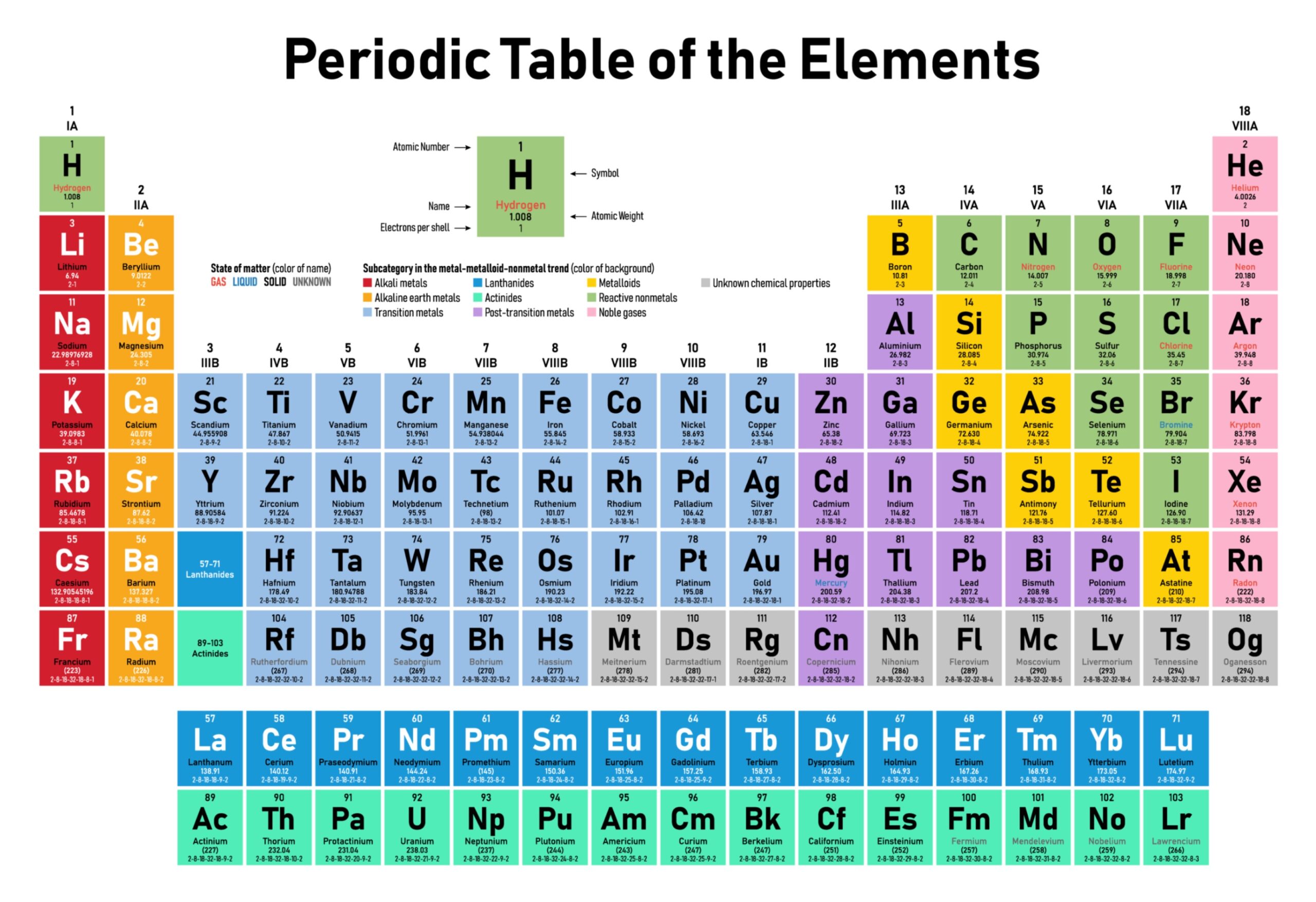
Alkaline earth metals are the six elements found in Group 2 of the Periodic Table.
They share similar physical properties, including being shiny, silvery-white metals.
Their chemical properties are defined by having two valence electrons, making them quite reactive.
The atomic radius increases as you move down the group, affecting their reactivity.
These metals can withstand high temperatures and form many useful calcium compounds.
Calcium is the most common element of the group and is vital for life.
Introduction
Welcome to the world of alkaline earth metals! These fascinating elements occupy the second column of the Periodic Table. If you’ve ever heard of the highly reactive alkali metals in Group 1, you can think of these as their slightly calmer cousins. This group includes some familiar names and plays a huge role in everything from our bodies to major industries. Let’s explore what makes these six metals so special, from their atomic structure to their everyday uses.
Overview of Alkaline Earth Metals in the Periodic Table
The alkaline earth metals are a family of elements grouped together in the Periodic Table for good reason. From beryllium to radium, they share a common electronic configuration that dictates much of their behavior. As you move down the group, the atomic number increases, and you’ll notice clear trends in their properties.
These elements are found in the Earth’s crust, but never in their pure form because they are too reactive. Understanding their position and basic structure is the first step to appreciating their unique chemistry. Next, we will cover which elements are in this group and why they earned their distinct name.
Elements Included in Group 2
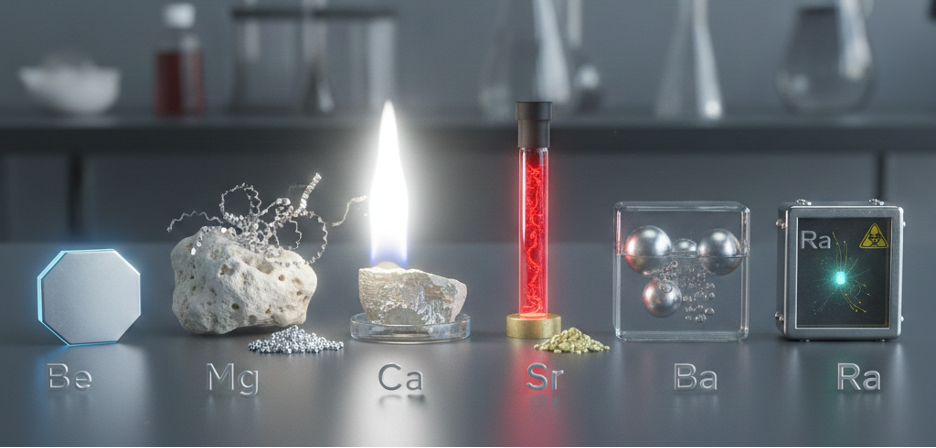
The elements that make up Group 2 are beryllium (Be), magnesium (Mg), calcium (Ca), strontium (Sr), barium (Ba), and radium (Ra).
Each one has its own unique characteristics, though they share family traits. For example, beryllium is the first member of the alkaline earth metals and is known for being very light and strong, forming unique beryllium compounds.
Further down the group, you find magnesium and calcium, which are essential to life. Calcium salts, for instance, are the building blocks of our bones and teeth. Strontium and barium are less common but have important industrial uses, such as in the compound barium sulfate, which is used in medical imaging.
Finally, radium is the heaviest element in the group and is highly radioactive. All isotopes of radium are unstable, meaning they decay over time. This radioactivity makes it different from the other members, which all have stable isotopes.
Why They Are Called Alkaline Earth Metals
Have you ever wondered where the name “alkaline earth metals” comes from? The name is a nod to the properties observed by early chemists. The “alkaline” part comes from the fact that their oxides, like calcium oxide, react with water to form basic, or alkaline, solutions. For example, when calcium oxide mixes with water, it produces calcium hydroxide.
The “earth” part of the name is an old term for nonmetallic substances that are insoluble in water and stable at high temperatures. Early chemists noted that compounds like beryllium oxide and the mineral barite (a source of barium) didn’t break down when heated.
Combining these two characteristics gives us the name for this group. They are metals whose “earths” (oxides) produce alkaline solutions. This simple name neatly summarises a key chemical trait of the entire family.
Position and Organisation in the Table
You can find the alkaline earth metals located in Group 2 of the Periodic Table, right next to the alkali metals. This specific column placement is determined by their atomic structure. Every element in this group has two outermost electrons in its s-orbital. This shared feature is what unites them and dictates their chemical behavior.
Because of their tendency to react, you will not find these elements in their pure form in nature. They are always bonded with other elements. Their position in Group 2 means they have a higher atomic number than the Group 1 element in the same row but a lower one than the elements to their right.
Here’s a quick look at their atomic numbers and electron configurations:
Element
Atomic Number
Electron Configuration
Beryllium
4
[He]2s²
Magnesium
12
[Ne]3s²
Calcium
20
[Ar]4s²
Strontium
38
[Kr]5s²
Barium
56
[Xe]6s²
Radium
88
[Rn]7s²
Atomic Structure and Physical Characteristics
The atomic structure of the alkaline earth metals is the key to understanding their physical properties. With two valence electrons, these elements form stronger metallic bonds than their Group 1 neighbours. This results in them being harder, denser, and having a higher melting point.
As you move down the group, the atomic radius increases, which influences many of their characteristics. We will now look more closely at some of these physical traits, including their atomic radii, melting and boiling points, and their appearance.
Atomic and Ionic Radii
The atomic radius of the alkaline earth metals increases as you go down the group. This happens because each element adds a new electron shell. Despite this, their atoms are smaller than the alkali metals in the same period because of a higher nuclear charge pulling the electrons in more tightly.
When these elements react, their electronic configuration changes. They lose their two outermost electrons, forming positive ions with a +2 charge. These ions have a much smaller size than their original neutral atoms. The ionic radii also increase as you move down the group, following the same trend as the atomic radius.
The small size of the ions, especially at the top of the group, results in a high charge density. This property is important as it influences how these ions interact with other substances, like water. It takes significant energy, known as the second ionisation energy, to remove that second electron, but the resulting stability makes it worthwhile.
Melting and Boiling Points
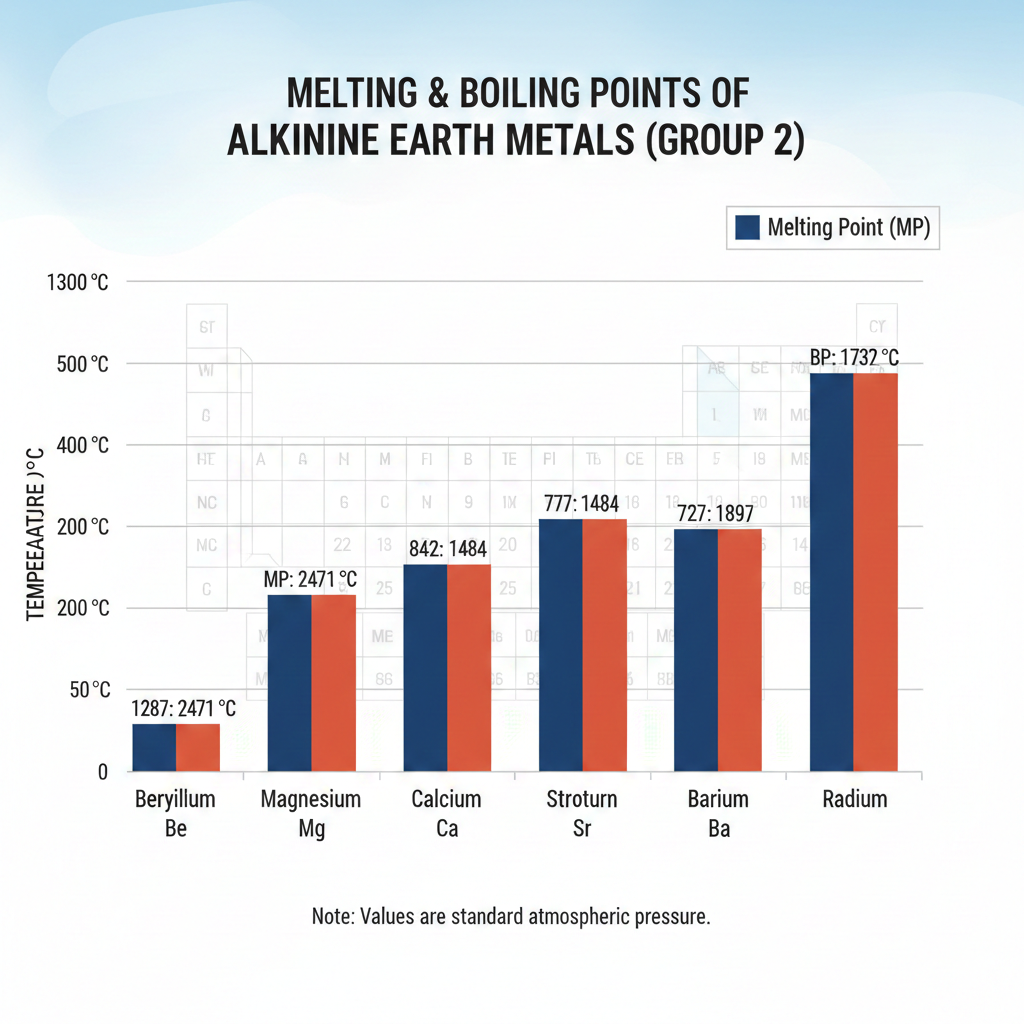
One of the defining features of alkaline earth metals is their relatively high melting point and boiling point compared to alkali metals. This is because they have two valence electrons, which participate in creating stronger metallic bonds within the crystal structure. These stronger bonds require more energy to break, leading to higher temperatures needed for melting and boiling.
All alkaline earth metals are solids at room temperature. As you move down the group from beryllium to barium, the melting and boiling points generally decrease, with magnesium being a slight exception to this trend. This is because the atoms get larger, and the metallic bonds become slightly weaker over the greater distance.
Despite this downward trend, their ability to withstand high temperatures makes them useful in various applications where heat resistance is crucial. Beryllium, at the top of the group, has the highest melting point of them all.
Density and Appearance Comparisons
When you look at the alkaline earth metals, one of the first physical properties you’d notice is their appearance. In pure form, they are all a shiny, silvery white metal. This bright, metallic luster gives them a classic silver appearance, although they tarnish quickly when exposed to air.
In terms of density, these metals are denser than the alkali metals. This is due to their smaller atomic size and stronger metallic bonding, which packs the atoms more tightly together. The general trend for density is that it increases as you move down the group from magnesium to radium.
Interestingly, calcium is an exception to this trend, as it has the lowest density of the group. Beryllium is also notable for being very lightweight yet strong. These variations in density are just one example of the subtle differences that make each element in the group unique.
Chemical Properties of Alkaline Earth Metals
The chemical properties of alkaline earth metals are largely driven by their desire to achieve a stable electron configuration. They readily lose their two outer electrons, which defines their common oxidation state of +2. This makes them good reducing agents, meaning they donate electrons in chemical reactions.
Because they are so willing to react, you won’t find them in their pure form in nature. The reactions of group 2 elements with other substances reveal a clear pattern of reactivity, which we will explore next, along with how they form ions and what happens when they encounter water.
Reactivity Trends Within Group 2
The chemical reactivity of the alkaline earth metals increases as you move down the group. Beryllium is the least reactive, while barium is much more reactive. This trend is directly linked to how easily each element can give up its valence electrons.
This increasing reactivity is explained by a property called first ionisation energy, which is the energy needed to remove one electron. This energy decreases down the group because the outermost electrons are farther from the nucleus and are shielded by inner electron shells. This makes them easier to remove.
As a result, elements lower in the group react more vigorously. For example, the formation of an oxide layer on the metal’s surface happens much more readily with barium than with beryllium. This predictable increase in reactivity is a hallmark of the group’s chemical behavior.
Formation of Divalent Positive Ions
A key chemical trait of all alkaline earth metals is their tendency to form divalent ions, which are positive ions with a +2 charge. This happens because each element has two electrons in its valence shell. By losing these two outermost electrons, the atom achieves the stable electron configuration of the nearest noble gas.
This process defines their most common oxidation state, which is +2. Although it requires energy to remove two electrons, the resulting ion is so stable that the overall process is favorable in most chemical reactions. This consistent formation of +2 ions is what allows these metals to form predictable ionic compounds.
Except for the radioactive radium, all the elements in this group have stable isotopes that exhibit this same behavior. The drive to empty their valence shell and form these divalent ions is the fundamental reason for their reactivity and the types of bonds they create.
Reactions with Water and Other Compounds
The reaction of alkaline earth metals with water showcases their increasing reactivity down the group. Beryllium is unique in that it does not react with water, even at high temperatures. This is because it quickly develops a protective layer that prevents a reaction.
Magnesium reacts, but only with hot water or steam, to form magnesium hydroxide and hydrogen gas. In contrast, calcium, strontium, and barium are reactive enough to react with cold water. These reactions produce the corresponding metal hydroxide, such as calcium hydroxide, and liberate hydrogen gas.
These elements also react with other substances. For example, most will burn in oxygen to cause the formation of an oxide. Beryllium compounds often show more covalent character compared to the more ionic compounds of the other group members. This variety in reactions makes the group chemically diverse.
Comparing Group 2 (Alkaline Earth Metals) to Group 1 Elements
While they are neighbours on the Periodic Table, the alkaline earth metals have noticeable differences from the alkali metals in Group 1. Although both groups are reactive metals, their chemical properties and physical traits set them apart. These differences are rooted in their atomic structure—Group 2 elements have two valence electrons, while Group 1 has only one.
This extra electron affects everything from their atomic radius and reactivity to the types of compounds they form. Let’s take a closer look at these distinctions in reactivity, physical characteristics, and compound formation.
Differences in Chemical Reactivity
When it comes to chemical reactivity, the alkali metals are the clear winners. Group 1 elements are more reactive than the Group 2 elements in the same period. The main reason for this is that alkali metals only need to lose one electron to achieve a stable state, which requires less energy.
Alkaline earth metals, on the other hand, must lose two electrons. While their final +2 oxidation state is very stable, the energy required to remove two electrons is significantly higher than that needed to remove one. This makes them reactive, but not as intensely as their Group 1 neighbours.
This difference is evident in their reactions. For instance, the formation of an oxide happens more violently with alkali metals. The higher ionisation energies of the Group 2 elements serve to temper their reactivity in comparison.
Distinctive Physical Properties
The physical properties of alkaline earth metals are also quite distinct from alkali metals. Generally, Group 2 elements are harder, denser, and have a higher melting point. This is a direct result of having two valence electrons instead of one.
These two electrons per atom contribute to stronger metallic bonds. A stronger bond means more energy is required to pull the atoms apart, leading to solids that can withstand high temperatures better than alkali metals. This enhanced bonding also packs the atoms closer together, increasing their density.
While the atomic radius of a Group 2 element is smaller than its Group 1 neighbor in the same period, the stronger forces holding the metal together give it more robust physical properties. These traits make them more suitable for structural applications where strength and durability are important.
Compound Formation Variations
The variation in compound formation between Group 1 and Group 2 is all about the charge. Alkali metals form ions with a +1 charge, while alkaline earth metals form ions with a +2 charge. This difference in charge leads to different chemical formulas and properties for their compounds.
For example, Group 2 elements form compounds like calcium carbonate (CaCO₃) and beryllium oxide (BeO). In these, the metal ion has a +2 charge, balancing the negative charge of the other part of the molecule. This is different from a Group 1 compound like sodium chloride (NaCl), where sodium has a +1 charge.
This +2 charge leads to stronger ionic bonds in the compounds of magnesium, calcium, and other Group 2 elements. This often results in higher melting points and lower solubility for many calcium compounds when compared to similar compounds of sodium or potassium.
Common Compounds of Group 2 Elements
Alkaline earth metals form a wide array of important compounds that we encounter in daily life and industry. From simple oxides and hydrides to more complex salts like carbonates and sulfates, these compounds have diverse properties and uses. The common +2 oxidation state of the metals leads to predictable chemical formulas.
Some well-known examples include calcium carbonate (limestone) and various beryllium compounds used in specialised applications. Next, we’ll explore some of the most common types of compounds, including their formation and characteristics.
Hydrides, Oxides, and Hydroxides
Alkaline earth metals react with hydrogen to form hydrides. While elements like calcium do this directly, beryllium hydride must be prepared indirectly. These hydrides, such as calcium hydride, can react violently with water to produce hydrogen gas.
Oxides are formed when these metals react with oxygen. Calcium oxide, also known as quicklime, is a common example. These oxides can then react with water to form hydroxides. The basicity of these hydroxides increases as you go down the group.
Hydroxides like calcium hydroxide (slaked lime) and magnesium hydroxide (milk of magnesia) are widely used. While beryllium compounds like its hydroxide are amphoteric (acting as an acid or a base), the hydroxides of the heavier elements are distinctly basic.
Carbonates, Sulfates, and Nitrates
Carbonates, sulfates, and nitrates are three major classes of salts formed by alkaline earth metals. Calcium carbonate is incredibly common in nature, found as limestone, marble, and chalk. Other carbonates, like strontium carbonate, are also industrially important.
The sulfates of these metals show an interesting trend in solubility. Beryllium sulfate is quite soluble in water, but solubility decreases down the group, making barium sulfate nearly insoluble. This property makes barium sulfate ideal for medical X-rays of the digestive system, as it won’t be absorbed by the body. Calcium sulfate is better known as gypsum.
Nitrates of the alkaline earth metals are typically prepared by reacting their oxides or carbonates with nitric acid. Unlike the carbonates and sulfates, most nitrates are soluble in water. They are stable salts but will decompose upon heating.
Solubility Patterns Across the Group
The solubility of alkaline earth metal compounds in water follows some clear patterns, but a single rule doesn’t cover everything. The trend often depends on the negative ion involved. This is due to a delicate balance between the energy holding the crystal together and the energy released when the ions are hydrated by water.
For some compounds, solubility decreases as you move down the group. This is true for sulfates and carbonates. The smaller ions at the top of the group, like Be²⁺ and Mg²⁺, have a high charge density and are hydrated more easily, which promotes solubility.
Here is a summary of key solubility trends:
Hydroxides: Solubility increases down the group.
Sulfates: Solubility decreases down the group. BeSO₄ is soluble, while BaSO₄ is insoluble.
Carbonates: Solubility decreases down the group.
Halides (except fluorides): Solubility generally decreases down the group. The properties of many calcium salts, strontium compounds, and magnesium compounds are dictated by these solubility rules.
Everyday Uses and Applications in Industry
You might be surprised by how often you encounter alkaline earth metals and their compounds. From construction and metallurgy to medicine and consumer products, their applications are widespread. Their unique properties make them indispensable in many areas.
For example, magnesium alloys are used in the automotive industries to make lightweight parts, while calcium compounds are the backbone of the cement industry. Let’s explore some of their specific uses in metallurgy, medicine, and other industrial sectors.
Metallurgy and Manufacturing
In the field of metallurgy, alkaline earth metals are highly valued. Because they readily give up their electrons, elements like calcium and magnesium are used as a reducing agent to extract other metals from their ores. This process often involves high temperatures, where the alkaline earth metal removes oxygen from a metal oxide.
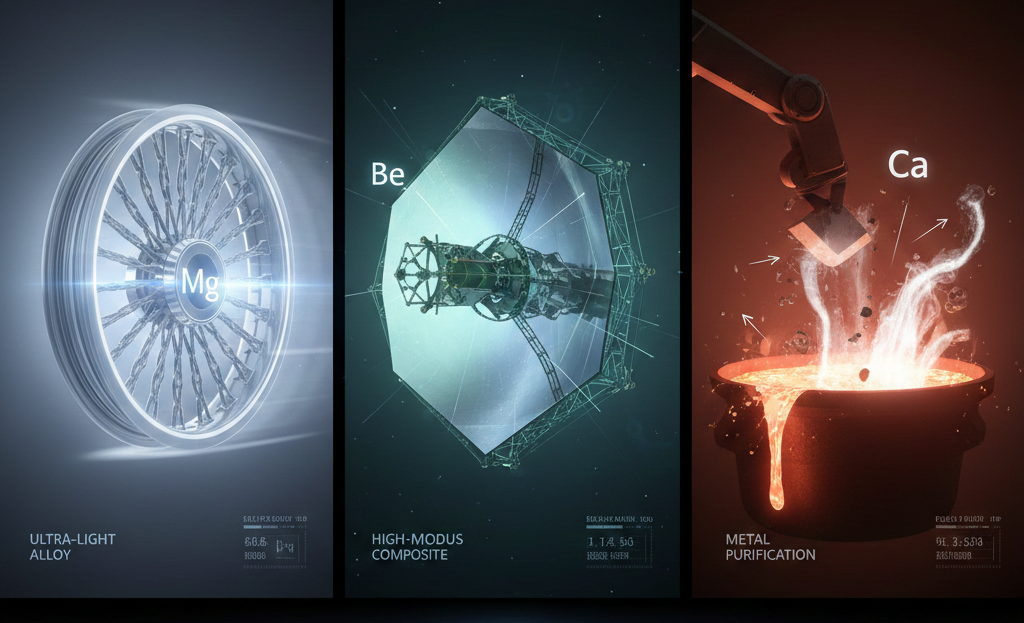
Calcium compounds are also essential in steelmaking, where they are used to remove impurities like sulfur and oxygen. Magnesium is famous for its use in strong, lightweight alloys. These alloys are crucial in the aerospace and automotive industries, where reducing weight improves fuel efficiency.
Barium, often sourced from the mineral barite, also has metallurgical applications. It is used in certain alloys and helps remove unwanted gases from vacuum tubes, a critical step in manufacturing electronics.
Medical and Biological Uses
The role of alkaline earth metals in living organisms is profound, particularly calcium. Calcium is a cornerstone of the human body, with calcium salts forming the primary structure of our bones and teeth. It is also essential for muscle function, nerve signaling, and blood clotting.
Magnesium is another vital element for life. It is present in every cell and is a critical component for over 300 enzymes in the body. It plays a key role in energy production and DNA synthesis.
Beyond their biological roles, some compounds have direct medical applications. Calcium carbonate is a common ingredient in antacids to neutralise stomach acid. In medical imaging, a patient might drink a solution of barium sulfate, which is opaque to X-rays, to get clear images of their digestive tract.
Other Industrial Applications
The uses of alkaline earth metals extend into many other industrial areas. Beryllium, for example, is almost transparent to X-rays. This property makes it perfect for making the “windows” in X-ray tubes and detectors. Beryllium compounds are also used in specialised alloys.
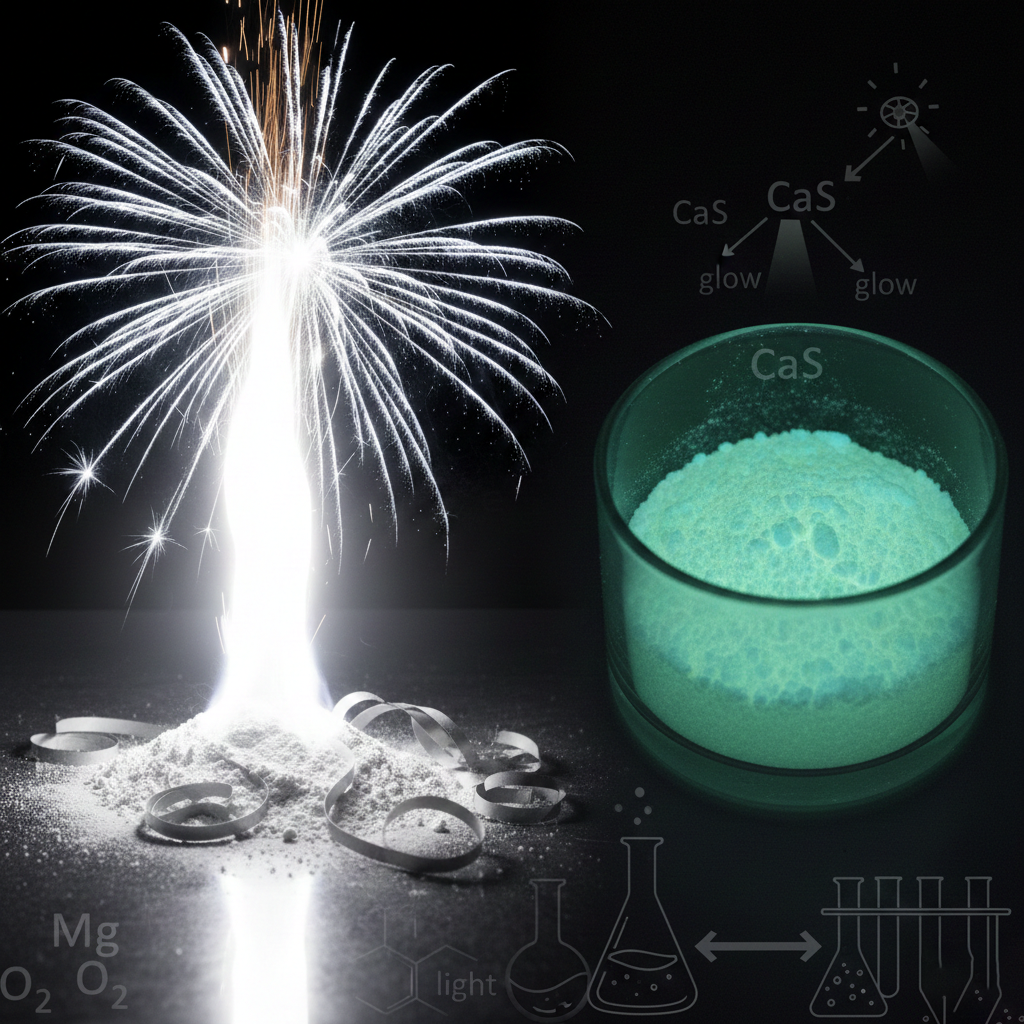
Strontium compounds are well-known for the brilliant red color they produce in fireworks and flares. Similarly, barium compounds produce a pale green color. These vibrant colors are created when the metal ions are heated.
Magnesium is highly flammable and burns with a very bright white light, making it a key ingredient in fireworks, flares, and incendiary devices. Other compounds like calcium sulfide have phosphorescent properties, meaning they can glow in the dark after being exposed to light. These diverse applications show just how versatile this group of elements is.
Conclusion
In conclusion, the alkaline earth metals represent an intriguing group in the Periodic Table with unique properties and significant applications. From their distinctive atomic structures to their reactivity trends, understanding these elements enhances our knowledge of chemistry and its practical implications. Whether you’re looking into their industrial applications or exploring their roles in medical sciences, the versatility of these metals is remarkable. Engaging with this topic not only deepens your appreciation for the building blocks of matter but also opens doors to various scientific fields.
Frequently Asked Questions
What elements are classified as alkaline earth metals?
The alkaline earth metals are the elements located in Group 2 of the Periodic Table. This family includes six elements: beryllium (Be), magnesium (Mg), calcium (Ca), strontium (Sr), barium (Ba), and the radioactive element radium (Ra). They share similar chemical and physical properties due to their atomic structure.
What is the trend in reactivity among Group 2 elements?
The chemical reactivity of Group 2 elements increases as you move down the Periodic Table from beryllium to barium. This is because the atomic radius gets larger, making it easier for the atom to lose its two outer electrons and achieve a stable +2 oxidation state.
What safety precautions are needed when handling alkaline earth metals?
When handling alkaline earth metals, safety is crucial due to their chemical properties. The pure form of these metals can be highly reactive, especially with water and acids. Magnesium powder is flammable and burns at very high temperatures, so it requires careful handling. Protective gear should always be used.
Here is a quick look at the fascinating world of Group 1 elements:
Group 1 elements in the periodic table, except for hydrogen, are known as the alkali metals.
They share similar chemical properties because their atomic structure includes a single electron in their outer shell.
These elements are highly reactive and readily form compounds with other elements.
Physically, alkali metals are soft, have a silvery luster, and possess low melting points.
Periodic trends show that as you move down the group, reactivity increases while ionization energy decreases.
Introduction
Welcome to the first column of the periodic table! This special neighborhood is home to a unique family of chemical elements known as Group 1. With the exception of hydrogen, these elements are called the alkali metals. They are famous in the world of chemistry for their high reactivity and distinct shared characteristics. Have you ever wondered what makes these metals so soft you can cut them with a knife or why they react so explosively with water? Let’s explore their intriguing properties together.
Overview of Periodic Table Group 1 Elements
The Group 1 elements are found in the far-left column of the periodic table of elements. This group is primarily made up of the alkali metals, which are known for being so reactive that they are almost always found in nature combined with other elements. Their tendency to react is a defining feature.
Because they all belong to the same group, these elements share many similar properties. This similarity stems from their atomic structure, as each one has a single electron in its outermost shell. This lone electron is the key to understanding their behavior, from their physical appearance to their chemical reactions. We will look closer at what defines this group, who its members are, and why they are so important.
Defining Group 1 on the Periodic Table
When you look at the periodic table, Group 1 is the very first vertical column on the left. This position signifies that all the elements within it share a fundamental structural characteristic that dictates their chemical behavior. Each element in this group has a unique atomic number, which represents the number of protons in its nucleus.
The members of Group 1 are lithium (Li), sodium (Na), potassium (K), rubidium (Rb), cesium (Cs), and francium (Fr). You might also notice hydrogen (H) at the top of this column. While it is placed here due to its atomic structure, it is not considered an alkali metal and has very different properties.
These Group 1 elements, from lithium down to francium, constitute a family with predictable and fascinating traits. Their placement isn’t random; it’s a direct reflection of their internal makeup, which we will explore further. Understanding this group is a perfect starting point for grasping the organisation and logic of the entire periodic table.
Introduction to Alkali Metals
The elements in Group 1 of the periodic table, from lithium to francium, are collectively known as the alkali metals. This special name gives us a big clue about one of their most important chemical properties. Have you ever wondered where the term “alkali” comes from?
The name is derived from the fact that these metals react with water to form alkalies. An alkali is a basic, or alkaline, compound, specifically a hydroxide of the metal. For example, when sodium reacts with water, it produces sodium hydroxide, a strong base.
These resulting alkaline solutions are caustic and can neutralise acids to form salts. This shared property of group members is a direct result of their similar atomic structures and is a key reason they are classified together. The term “alkali metals” perfectly captures this defining chemical trait.
Brief History and Discovery of Alkali Metals
Humanity’s relationship with alkali metal compounds dates back to ancient times. The Old Testament mentions a salt called “neter,” which we now know as sodium carbonate, extracted from plant ashes. Another compound, saltpetre (potassium nitrate), was a crucial ingredient in gunpowder, which was invented in China around the 9th century.
However, the elements themselves remained undiscovered until the 19th century. The breakthrough came in 1807 when the English chemist Sir Humphry Davy successfully isolated potassium and then sodium using electrolysis. This was a monumental achievement in chemistry, revealing the pure form of these highly reactive metals for the first time.
Following Davy’s work, other alkali metals were gradually discovered. Lithium was identified in 1817, while cesium and rubidium were found in 1860 by researchers studying mineral waters and their unique spectral lines. The last to be found was francium, a radioactive element discovered by Marguerite Perey in 1939.
Importance in Chemistry and the CAPS Curriculum
The study of Group 1 chemical elements is a cornerstone of chemistry education, including in frameworks like the CAPS curriculum. Why? Because they provide a perfect illustration of periodic trends and the relationship between atomic structure and properties. Understanding this group helps you grasp core concepts that apply across the entire periodic table.
Their importance extends far beyond the classroom. In industrial chemistry, sodium is used to produce a vast array of compounds, including caustic soda (sodium hydroxide) and baking soda. It also plays a role as a heat-transfer fluid in some nuclear reactors.
From everyday life to advanced technology, the applications are widespread. Potassium salts are vital components of agricultural fertilisers, supporting global food production. Meanwhile, lithium is at the heart of the rechargeable battery revolution, powering everything from your phone to electric vehicles. Their unique properties make them indispensable in modern society.
Elements Included in Group 1
Group 1 of the periodic table is a small but significant family. It officially includes seven elements: hydrogen (H), lithium (Li), sodium (Na), potassium (K), rubidium (Rb), cesium (Cs), and francium (Fr). While they all share a spot in the first column, there is a major distinction within the group.
Hydrogen stands apart as a nonmetal gas, while the other six elements are known as the alkali metals. This distinction is crucial for understanding the properties of the group. Each member, from the unique hydrogen to the highly reactive francium, has its own story, characteristics, and uses that make it interesting. Let’s meet each member of this family individually.
Hydrogen’s Unique Place in Group 1
Hydrogen holds a unique and debated position at the top of Group 1 in the periodic table. It is placed there for one simple reason: like the alkali metals below it, it has a single outermost electron. This shared configuration is why it is sometimes considered a Group 1 element.
However, the similarities end there. Unlike the other members, hydrogen is a non-metal. At room temperature, it exists as hydrogen gas, a completely different state from the solid alkali metals. Its chemical behavior is also distinct; it typically forms covalent compounds by sharing its electron, whereas alkali metals form ionic compounds by losing their electron.
Furthermore, hydrogen does not react with water to form an alkaline hydroxide, which is the defining reaction of the alkali metals. Because of these significant differences in physical and chemical properties, hydrogen is often treated as a group of its own, despite its address in the first column.
Lithium — Properties and Occurrence
Lithium, with the atomic number 3, is the first of the alkali metals and the lightest of all metallic elements. It is a soft, silvery-white metal that has the highest melting point in its group, at 180.5 °C (356.9 °F). Despite being an alkali metal, it is less reactive than its family members like sodium and potassium.
In terms of occurrence, lithium is relatively rare, making up only about 0.002 percent of Earth’s crust. It is so reactive that it is never found in its pure form in nature, but rather within minerals and salts.
Today, the most significant use of lithium is in the construction of lightweight, rechargeable lithium batteries. These batteries power a huge range of modern electronics, from smartphones and laptops to electric vehicles. This application has made lithium one of the most commercially important alkali metals.
Sodium — Characteristics and Abundance
Sodium (Na) is arguably the most well-known and abundant of the alkali metals. It makes up about 2.8 percent of Earth’s crust, making it the most common alkali metal by a large margin. Its chemical properties include high reactivity, especially with water, and a tendency to form a +1 ion in compounds.
You are likely most familiar with sodium through its most common compound: sodium chloride (NaCl), also known as common salt or table salt. This simple compound is essential for life and is found throughout the world in oceans and salt deposits.
Beyond the dinner table, sodium metal has major industrial importance. It is used in the manufacturing of many commercial products, including soaps, detergents, street lamps, and pharmaceuticals. Its widespread availability and useful chemical properties make it a workhorse element in the chemical industry.
Potassium — Physical and Chemical Profile
Potassium, with the atomic number 19 and symbol K, is another key member of the alkali metal family. Physically, it is a soft, silvery-white metal that is even more reactive than sodium. One interesting physical quirk is that potassium is less dense than sodium, which is an exception to the general trend of increasing density down the group.
Like other alkali metals, potassium reacts vigorously with water. This chemical reaction produces potassium hydroxide, a strong base, along with flammable hydrogen gas. The heat from the reaction is often enough to ignite the hydrogen, resulting in a lilac-colored flame.
While the pure metal has some uses, potassium’s greatest impact is through its compounds. Potassium salts are a vital ingredient in agricultural fertilisers, playing a crucial role in plant growth and crop yields. This makes potassium essential for feeding the world’s population.
Rubidium — Rarity and Uses
Moving down Group 1, we encounter rubidium (Rb), an element known for its rarity and specialised applications. It is considerably less common than sodium or potassium, comprising only about 0.01 percent of Earth’s crust. Like its siblings, it is a soft, silvery-white metal that is highly reactive.
The discovery of rubidium was linked to the unique red lines in its emission spectrum. This property of group elements to emit specific colors of light is key to some of their uses. Rubidium’s properties make it useful in certain high-tech applications rather than broad industrial processes.
For example, rubidium is used in the manufacturing of special optical glasses and plays a role in laser cooling research. It has also found a niche use in atomic clocks, although its cousin, cesium, is more commonly used for that purpose. Its rarity means its applications remain limited and highly specific.
Cesium — Distinct Features and Applications
Cesium (Cs) stands out among the alkali metals for its extreme properties. It is an incredibly soft, silvery-gold metal with one of the lowest boiling points and melting points of any metal. It melts at just 28.4 °C (83.1 °F), which means it can turn into a liquid on a hot day or even from the heat of your hand.
This element is even more reactive than the alkali metals above it in the periodic table. Its reaction with water is extremely violent and explosive. Due to its rarity and high reactivity, its direct industrial applications are limited but highly significant.
The most famous application of cesium is in atomic clocks. The high precision of timekeeping is based on the vibrations of cesium atoms. Cesium atomic clocks are so accurate that they are used as the primary standard for measuring time worldwide. It is also used in night-vision equipment.
Francium — Scarcity and Significance
At the very bottom of Group 1 sits francium (Fr), the heaviest and most mysterious member. With an atomic number of 87, francium is defined by its extreme scarcity and instability. It is a radioactive element, and its most stable isotope has a half-life of only 22 minutes.
This intense radioactivity and short lifespan mean that francium exists in only minute quantities in nature. It is the second rarest naturally occurring element in Earth’s crust. Because it decays so quickly, it is incredibly difficult to gather enough of it to study its physical and chemical properties in detail.
Due to its scarcity and instability, francium has no commercial applications. Its significance is purely academic. Scientists study it to better understand nuclear physics and the properties of heavy, unstable elements. It represents the ultimate expression of the periodic trends seen in Group 1, being the most reactive and largest atom in the family.
Origin of the Term “Alkali Metals”
Have you ever wondered why the Group 1 elements are called “alkali metals”? The name is not random; it is a direct description of their most characteristic chemical property. The etymology of the word “alkali” provides a fascinating glimpse into the history of chemistry.
When these metals react with water, they form strong bases known as alkalies. These alkaline solutions, such as sodium hydroxide, are caustic and capable of neutralising acids. This shared ability to produce alkalies is what unites these elements under a single family name, perfectly capturing their chemical identity. We will now look into the word’s origin and the chemical reason for the name.
Etymology of Alkali and Its Relevance
The term “alkali” has ancient roots that connect directly to the properties of Group 1 compounds. The word is derived from the Arabic “al-qaly,” which means “the calcined ashes.” This refers to the historical practice of extracting substances from the ashes of burnt plants.
These ancient chemists realised that the ashes, when mixed with water, created a slippery solution that could be used for cleaning—what we now know as a basic or alkaline solution. The substances they were extracting were primarily sodium and potassium carbonates, which are compounds of alkali metals.
This historical connection is still relevant today. The name “alkali” was eventually applied to the metals themselves once they were isolated, as they are the source elements for these alkaline solutions. The etymology beautifully reflects the long-standing human observation of the chemical nature of Group 1 compounds.
Reasons for the Name ‘Alkali Metals’
The name “alkali metals” is a direct and descriptive label based on a key chemical reaction. The primary reason for this name is their vigorous reaction with water, which produces a specific type of product. This reaction is one of the most defining properties of the group.
When an alkali metal is added to water, it forms a metal hydroxide and hydrogen gas. These metal hydroxides are strong bases, meaning they create highly alkaline solutions when dissolved in water. It is this production of alkalies that gives the metals their family name.
Here is a summary of why they earned this title:
They react with water to form hydroxides (e.g., sodium hydroxide).
These hydroxides are strong bases.
Solutions of these hydroxides are known as alkaline solutions.
The term “alkali” itself refers to strong bases capable of neutralising acids.
Comparison with Other Metal Families
When you compare the alkali metals to other metal families in the periodic table, such as the transition metals (like iron, copper, and gold), the differences are striking. The most obvious contrast is in their physical properties. While transition metals are generally hard, strong, and dense, alkali metals are exceptionally soft and have very low densities.
Think about a typical piece of metal, like an iron nail. It is hard and has a high melting point. In contrast, alkali metals are so soft they can be cut with a simple knife, and some, like cesium, will melt on a hot day. This is due to the weaker metallic bonding in alkali metals compared to the strong bonds in transition metals.
Their chemical properties are also worlds apart. Alkali metals are the most reactive of all metals, readily losing their single outer electron. Transition metals are generally much less reactive and can have multiple oxidation states. These differences highlight how an element’s position in the periodic table profoundly influences its character.
Atomic Structure and Electron Configuration
To truly understand why the Group 1 elements behave the way they do, we need to look at their atomic structure. The secret to their similar properties lies in their electron configuration. Each element in this group has something in common: a single electron in its outermost energy level, or outer shell.
This lone electron, known as a valence electron, is the key player in their chemical reactions. It is relatively easy for the atom to lose, which is why these elements are so reactive. Let’s examine the specific electron patterns and see how this structure influences their behavior.
General Electron Configuration Pattern
The defining feature of the Group 1 elements is their consistent electron configuration. Every alkali metal has just one electron in its outermost s-orbital. This pattern is often represented by the general notation ns¹, where ‘n’ stands for the principal energy level or shell number.
As you move down the group in the periodic table, the number of electron shells increases, but the configuration of the outermost shell remains the same. For lithium (Li), it is 2s¹; for sodium (Na), it is 3s¹; and so on. This consistency is the reason they exhibit such similar chemical properties.
This simple, repeating pattern in their atomic structure is fundamental to the organisation of the periodic table. The table below shows the electron configuration for each of the alkali metals, clearly illustrating this shared trait.
Alkali Metal
Symbol
Electron Configuration
Number of Shells
Lithium
Li
[He] 2s¹
2
Sodium
Na
[Ne] 3s¹
3
Potassium
K
[Ar] 4s¹
4
Rubidium
Rb
[Kr] 5s¹
5
Cesium
Cs
[Xe] 6s¹
6
Francium
Fr
[Rn] 7s¹
7
Impact of Valence Electrons on Reactivity
The single valence electron in an alkali metal’s outer shell has a profound impact on its reactivity. Atoms strive to achieve a stable electron configuration, similar to that of the noble gases, which have a full outer shell. For an alkali metal, the easiest way to achieve this stability is to lose that one lone electron.
Once this valence electron is lost, the atom becomes a positively charged ion (a cation) with a +1 charge. The remaining electron shells are full, making the ion very stable. This strong tendency to give away an electron is what makes the alkali metals so highly reactive.
This is why their chemical properties are so predictable. Whether they react with water, oxygen, or halogens, the underlying process is the same: the alkali metal atom donates its single valence electron to another atom. This fundamental drive to lose an electron explains their vigorous reactions and their inability to exist as pure elements in nature.
Trends Down the Group
As you travel down Group 1 from lithium to francium, several predictable periodic trends emerge, all directly related to their atomic structure. The most noticeable trend is the increase in the size of the atoms.
With each step down the group, a new electron shell is added. This means the outermost electron is progressively farther from the nucleus. This increasing distance weakens the force of attraction between the positive nucleus and the negative valence electron, which has significant consequences for the element’s properties.
These structural changes lead to clear trends:
The atomic radius increases because of the addition of more electron shells.
The number of shells increases, placing the valence electron further from the nucleus.
Reactivity increases because the outermost electron is more easily lost.
Ionization energy decreases, as less energy is needed to remove the distant valence electron.
Physical Properties of Group 1 Elements
The alkali metals share a set of distinctive physical properties that set them apart from most other metals. When freshly cut, they exhibit a bright, silver-like luster, but this quickly tarnishes as they react with air. They are also known for being remarkably soft and having surprisingly low densities.
Furthermore, these elements have very low melting points and boiling points compared to metals like iron or copper. These unique characteristics are all tied back to their atomic structure and the nature of the metallic bonding within them. Let’s take a closer look at their appearance, density, and melting behavior.
Color, Luster, and Texture
When you first see a pure sample of an alkali metal, its appearance can be surprising. Unlike the hard, sturdy metals we encounter daily, these elements have a unique combination of color, luster, and texture.
Upon being cut, an alkali metal reveals a shiny, silvery-white surface. This metallic luster is bright but short-lived. Due to their high reactivity, this surface quickly dulls as the metal reacts with oxygen and moisture in the air. The only exception is cesium, which has a slightly golden hue. Their texture is perhaps their most famous physical property: they are exceptionally soft.
Here is a summary of their appearance:
Color: Silvery-white (cesium has a pale gold tint).
Luster: Bright and metallic when freshly cut, but tarnishes rapidly.
Texture: Very soft, with a consistency often compared to cold butter or clay.
Density and Softness
Two of the most defining physical properties of Group 1 elements are their low density and remarkable softness. These traits are directly linked to their large atomic size and the weak metallic bonds holding the atoms together. The atoms are not packed together tightly, which results in these unusual characteristics.
The densities of the alkali metals are so low that the first three members—lithium, sodium, and potassium—are actually less dense than water, meaning they will float! While density generally increases as you move down the group, there is a small exception: potassium is slightly less dense than sodium.
Their softness is equally notable. All the alkali metals are so soft that they can be easily cut with a butter knife. This softness increases as you go down the group because the metallic bonds become even weaker as the atoms get larger. This is a stark contrast to the hardness of most common metals.
Melting and Boiling Points
Compared to other metals, the alkali metals have exceptionally low melting points and boiling points. This is another consequence of the weak metallic bonds between their atoms. It simply does not take much heat energy to break these bonds and allow the atoms to move freely as a liquid or a gas.
A clear trend can be observed as you move down the group: the melting and boiling points decrease. Lithium, at the top, has the highest melting point of the group at 179 °C (354 °F). As the atoms get larger down the group, the metallic bonds get weaker, requiring even less energy to overcome.
This trend reaches its extreme with cesium, which melts at a mere 28.5 °C (83.3 °F). This is just above room temperature, meaning a solid piece of cesium could melt in your hand. This demonstrates just how weak the forces holding these metal atoms together are.
Comparison to Other Element Groups
When placed side-by-side with other element groups, particularly the transition metals, the unique nature of the alkali metals becomes crystal clear. Think of iron, a typical transition metal. It is hard, dense, and has a very high melting point. The alkali metals are practically the opposite in every one of these physical properties.
This stark contrast arises from fundamental differences in atomic structure and bonding. Transition metals have strong metallic bonds, resulting in their robust physical characteristics. Alkali metals, with their single valence electron and large atomic size, have much weaker bonds, leading to their softness and low melting points.
Let’s summarise the key differences:
Hardness: Alkali metals are soft; transition metals are hard.
Density: Alkali metals have low densities; transition metals are dense.
Melting Point: Alkali metals have low melting points; transition metals have high melting points.
Reactivity: Alkali metals are highly reactive; transition metals are generally much less reactive.
Chemical Properties of Alkali Metals
The chemical properties of the alkali metals are dominated by one key feature: their extreme reactivity. This is driven by their atomic structure, as each has a single electron in its outer shell that it is eager to donate. This tendency to lose an electron defines almost every chemical reaction they participate in.
When they react, they consistently form a positive ion with a +1 oxidation state. This predictable behavior makes them excellent examples for studying chemical principles. From their explosive reactions with water to the way they form salts, their chemistry is both exciting and illustrative. Let’s examine what makes them so reactive and how they behave in chemical reactions.
High Reactivity and Causes
The alkali metals are the most reactive metallic elements in the entire periodic table. This high reactivity is not accidental; it is a direct result of their atomic structure. Several factors combine to make it very easy for them to engage in a chemical reaction, often with very little prompting or low activation energy.
The main cause is the single valence electron in their outer shell. Losing this one electron allows the atom to achieve the stable electron configuration of a noble gas, a very energetically favorable state. Combined with their low ionization energies and large atomic radii, the conditions are perfect for rapid reactions.
Here are the primary reasons for their high reactivity:
They have only one valence electron.
Losing this electron results in a stable, full outer shell.
They have low first ionization energies, so the electron is easy to remove.
The reactivity increases down the group as the atoms get larger and the electron is held more loosely.
Ionization Energies Across the Group
Ionization energy is the energy required to remove an electron from an atom. For the alkali metals, the first ionization energy—the energy needed to remove their single valence electron—is very low compared to other elements. This is a key reason for their high reactivity.
A clear trend exists within the group: first ionization energy decreases as you move down the periodic table from lithium to francium. This is because the outermost electron is in progressively higher energy levels and farther from the nucleus. The increased distance and shielding from inner electrons weaken the nucleus’s pull, making the electron easier to remove.
However, if you try to remove a second electron, the story changes dramatically. The second ionization energy for an alkali metal is enormous. This is because the second electron would have to be removed from a now-stable, full electron shell. This huge energy barrier is why alkali metals almost exclusively form ions with a +1 charge.
Formation of Ions and Salts
A cornerstone of alkali metal chemistry is the formation of ions. Because they readily lose their single valence electron, they form positively charged ions, known as cations, with a charge of +1. These are referred to as alkali metal cations (for example, Li⁺, Na⁺, K⁺).
This process is the first step in many of their reactions. Once the cation is formed, its positive charge attracts it to negatively charged ions (anions) formed by nonmetals, such as chloride (Cl⁻) or oxide (O²⁻). This electrostatic attraction results in the formation of stable ionic compounds.
The most famous of these ionic compounds are salts. A salt is simply an ionic compound formed from the reaction between an acid and a base, or more directly, from a metal and a nonmetal. Sodium chloride (NaCl), or table salt, is the classic example, formed from the sodium cation (Na⁺) and the chloride anion (Cl⁻).
Typical Compounds in Chemistry
Thanks to their high reactivity, alkali metals form a wide variety of important compounds that are fundamental in both nature and industry. These compounds are typically white, crystalline solids that are soluble in water. Their formation is a direct result of the metal donating its single valence electron.
Many of these compounds are household names. From the salt on your table to the soap in your bathroom, alkali metal compounds are all around us. In chemistry labs and industrial plants, these compounds serve as essential reagents and building blocks for countless processes.
Here are some of the most typical compounds they form:
Halides: Such as sodium chloride (NaCl) and potassium chloride (KCl).
Hydroxides: Strong bases like sodium hydroxide (NaOH) and potassium hydroxide (KOH).
Carbonates: Including sodium carbonate (Na₂CO₃), known as washing soda.
Nitrates: Such as potassium nitrate (KNO₃), used in fertilisers and historically in gunpowder.
Periodic Trends Observed in Group 1
Group 1 is a perfect case study for observing periodic trends. As you move down the column from top to bottom, several properties change in a predictable and logical way. These patterns are not random; they are a direct consequence of the systematic change in atomic structure from one element to the next.
Key trends include changes in atomic radius, ionization energy, electronegativity, and overall reactivity. Understanding these trends provides deep insight into how the periodic table is organised and why elements in the same group behave like a family. Let’s explore these fascinating patterns in more detail.
Atomic and Ionic Radii Variations
One of the most straightforward periodic trends in Group 1 is the variation in atomic and ionic radii. Both the size of the neutral atom (atomic radius) and the size of its corresponding ion (ionic radius) increase as you move down the group.
The reason for this trend is simple: each element down the group has one more electron shell than the one above it. This addition of a new shell pushes the outermost electron further away from the nucleus, significantly increasing the overall size of the atom.
This steady increase in size has major implications for the elements’ other properties. Here’s a breakdown of the trend:
Trend: Atomic and ionic radii increase down the group.
Reason: Addition of a new electron shell for each successive element.
Example: A cesium atom is much larger than a lithium atom.
Effect: A larger radius weakens the nucleus’s hold on the outermost electron.
Changes in Electronegativity
Electronegativity is a measure of an atom’s ability to attract a bonding pair of electrons in a chemical bond. The alkali metals as a group have the lowest electronegativity values of all the elements. This is because their preference is to lose an electron, not to attract them.
There is also a clear trend within the group. Electronegativity decreases as you move down Group 1 from lithium to cesium. This happens because the bonding electrons are further away from the positive pull of the nucleus in larger atoms.
This decreasing pull means that heavier alkali metals like cesium are even less likely to attract electrons than lighter ones like lithium. This trend is perfectly in line with their increasing reactivity down the group; the less an atom attracts electrons, the more easily it can give its own away.
Reactivity Shift from Lithium to Francium
The most dramatic periodic trend in Group 1 is the clear and consistent increase in reactivity as you descend the periodic table. Lithium, at the top, is the least reactive of the alkali metals (though still highly reactive compared to most other metals). This reactivity steadily intensifies, reaching its peak with cesium and the highly unstable francium.
This trend is a direct result of the changes in atomic structure. As the atomic radius increases and the first ionization energy decreases down the group, the single valence electron is held more loosely. It takes less energy for a cesium atom to lose its electron than for a lithium atom.
This ease of electron loss means that the heavier alkali metals can participate in chemical reactions more readily and vigorously. The shift from a brisk fizzing reaction with lithium and water to a violent explosion with cesium and water is a powerful visual demonstration of this fundamental periodic trend.
Reaction Types Showcasing Trends
The increasing reactivity down Group 1 is not just a theoretical concept; it can be clearly observed in the way these elements undergo chemical reactions. Certain reaction types serve as excellent showcases for this trend, with the vigor of the reaction escalating from one element to the next.
The most classic example is the reaction with water. Lithium fizzes steadily, sodium darts across the surface of the water, potassium ignites with a lilac flame, and rubidium and cesium explode on contact. This provides undeniable proof of the increasing reactivity down the periodic table.
Other reactions also display this trend:
Reaction with Water: The reaction becomes more violent down the group.
Reaction with Air/Oxygen: Heavier alkali metals tarnish more rapidly and form different types of oxides.
Reaction with Halogens: The reactions become more energetic as you descend the group.
Common Reactions of Alkali Metals
Given their high reactivity, it is no surprise that alkali metals participate in a variety of common and often dramatic chemical reactions. These reactions are fundamental to inorganic chemistry and are often used in chemical synthesis to create other useful compounds. Their eagerness to donate an electron drives their interactions with many different substances.
Their reactions with water, oxygen, and acids are particularly characteristic. These interactions not only define their chemical identity but also highlight the need for careful handling. Let’s explore some of these signature reactions and the products they form.
Reaction with Water and Resulting Products
The reaction of alkali metals with water is one of the most famous demonstrations in chemistry. It is a vigorous, exothermic chemical reaction that showcases their high reactivity. When an alkali metal comes into contact with water, it produces two main products: a metal hydroxide and hydrogen gas.
The metal hydroxide, such as sodium hydroxide, dissolves in the water to create a strong alkaline or basic aqueous solution. The reaction also releases a large amount of heat. This heat is often sufficient to melt the metal and can even ignite the flammable hydrogen gas that is produced, sometimes resulting in an explosion.
This violent potential is why handling alkali metals is considered hazardous and requires strict safety precautions.
Reactants: Alkali metal + Water
Products: Metal Hydroxide + Hydrogen Gas
Energy: Highly exothermic (releases heat)
Hazard: The heat can ignite the hydrogen gas, causing a fire or explosion.
Reaction with Oxygen and Air
Alkali metals react readily with oxygen and water vapor present in the air. This is why a freshly cut, shiny surface of an alkali metal will quickly tarnish and turn dull. This reaction is a form of oxidation, where the metal loses its valence electron to oxygen atoms.
To prevent this, alkali metals must be stored in a way that protects them from the atmosphere. Lighter metals like lithium are often stored in paraffin wax, while heavier ones like sodium and potassium are stored under an inert liquid like mineral oil or kerosene.
The type of oxide formed actually varies as you go down the periodic table. Lithium forms a simple oxide (Li₂O). Sodium primarily forms a peroxide (Na₂O₂), and potassium, rubidium, and cesium form superoxides (like KO₂). This variation in the products formed is another interesting example of the changing chemical properties within the group.
Interactions with Acids and Bases
If the reaction of alkali metals with water is vigorous, their reaction with acids is even more violent. When an alkali metal is added to an acidic solution, it reacts explosively to produce a salt and hydrogen gas. The reaction is much faster and more energetic than with water because the acid provides a high concentration of hydrogen ions to react with.
On the other side of the pH scale, alkali metals themselves do not react with bases. However, the compounds they form are central to acid-base chemistry. As we’ve seen, alkali metals react with water to produce strong bases like sodium hydroxide (NaOH).
These alkali metal hydroxides are widely used in laboratories and industries to neutralise acids. This neutralisation reaction is a fundamental chemical process that produces a salt and water, demonstrating the full cycle of the alkali metals’ role in creating and reacting with acids and bases.
Flame Test Colors and Their Uses in Chemistry
The flame test is a fascinating method used to identify the presence of specific alkali metal cations by observing the unique colors produced during combustion. For instance, lithium imparts a bright red flame, while sodium results in a vibrant yellow flame, and potassium showcases a lilac hue. These colors arise from the excitation of valence electrons in the outer shell of the metal, releasing energy in the form of light. Beyond identification, flame tests are also utilised in various chemical analyses, aiding in understanding molecular structures and supporting research in fields like inorganic chemistry and applied chemistry.
Notable Compounds Formed by Group 1 Elements
Group 1 elements, often known as alkali metals, form several notable compounds due to their unique properties. Sodium chloride, commonly known as table salt, is perhaps the most recognised, formed when sodium reacts with chlorine gas. Additionally, alkali metals readily form hydroxides, like sodium hydroxide, which are essential in the chemical industry for creating alkaline solutions. Other significant compounds include potassium salts and lithium carbonate, commonly used in various applications ranging from fertilisers to batteries. The diverse molecular structures of these compounds showcase the interesting chemistry that arises from their low ionization energies and high reactivity.
Formation and Uses of Alkali Metal Hydroxides
Alkali metal hydroxides, such as sodium hydroxide and potassium hydroxide, are formed through the reaction of alkali metals with water. This chemical reaction produces hydroxide ions and releases hydrogen gas, contributing to the strong alkaline nature of these compounds. These versatile hydroxides find numerous applications in various industries. They are essential in the production of soaps, detergents, and paper, showcasing their significance in the chemical industry. Additionally, they play a crucial role in organic synthesis and water treatment, making them valuable for both industrial and environmental applications.
Chlorides, Nitrates, and Sulfates
A variety of important compounds emerge from the alkali metals, notably chlorides, nitrates, and sulfates. Chlorides, formed by reacting alkali metals with chlorine, are widely used in industries, serving as essential salts like sodium chloride. Nitrates derived from nitric acid play crucial roles in fertilisers, enhancing plant growth effectively. Sulfates, on the other hand, are produced from sulfuric acid and have diverse applications, ranging from manufacturing to pharmaceuticals. Collectively, these compounds illustrate the chemical versatility of alkali metals, underpinning their significance in both everyday life and industrial processes.
Organometallic Compounds in Modern Chemistry
Organometallic compounds play a crucial role in modern chemistry, bridging the gap between organic and inorganic materials. These unique compounds, which feature metal atoms bonded to carbon-containing groups, are invaluable in chemical synthesis, allowing researchers to explore new reaction pathways. For instance, they are often utilised in homogeneous catalysis, making processes more efficient by reducing activation energy. Their molecular structure contributes to various applications, from pharmaceuticals to advanced materials. As scientists continue to innovate, understanding these compounds will enhance our ability to manipulate chemical reactions and develop cutting-edge technologies.
Coordination Compounds of Alkali Metals
Coordination compounds of alkali metals play a fascinating role in both organic and inorganic chemistry. These compounds are formed when alkali metal cations, like sodium or potassium, bond with electron pair donors, creating unique molecular structures. Their ability to stabilise various ligands leads to interesting properties that can be harnessed in industrial applications such as catalysis and chemical synthesis. Due to their distinctive interactions, these coordination complexes also contribute to advances in materials science. Understanding these compounds expands our knowledge of the periodic table and highlights the versatility of alkali metals in diverse chemical reactions.
Industrial and Everyday Applications
Applications of alkali metals are abundant in both industrial and everyday settings. In the realm of electronics, lithium-ion batteries have become essential, powering everything from smartphones to electric vehicles. Sodium, a key player in the chemical industry, contributes to the production of sodium hydroxide, essential for many chemical reactions. In medicine, potassium salts are vital for maintaining human health while also finding roles in various pharmaceuticals. Additionally, the agricultural sector heavily relies on these elements for fertilisers, ensuring optimal plant growth. Through various practical uses, alkali metals demonstrate their fundamental importance in our daily lives.
Usage in Batteries and Electronics
Lithium batteries are a popular choice in portable electronics, thanks to their light weight and high energy density. These alkali metal cells facilitate efficient energy storage and longer battery life, essential for devices like smartphones and laptops. The unique electron configuration of lithium contributes to its low activation energy, allowing for quick energy release during chemical reactions. Additionally, sodium ions are increasingly utilised in rechargeable batteries, offering a cost-effective alternative. With advancements in railway and electrical engineering, understanding the properties of these alkali metal cations enhances the development of energy-efficient technologies and sustainable practices in electronics.
Role in Pharmaceuticals and Medicine
Alkali metals play a vital role in the field of pharmaceuticals and medicine. Sodium, for instance, is essential in regulating bodily fluids and keeping our nerves functioning properly. These elements form ionic compounds, such as sodium chloride, which are commonly used in saline solutions for hydration and electrolyte balance. Potassium is another key player, often administered to help with heart function and blood pressure regulation. The unique properties of these metals facilitate the development of various medications, showcasing their importance in medical chemistry and enhancing our overall health and well-being.
Food Industry and Agricultural Applications
In the food industry, alkali metals like sodium play a vital role in food preservation and seasoning. Sodium chloride, commonly known as table salt, not only enhances flavor but also helps inhibit microbial growth, ensuring food safety. Additionally, potassium, another key alkali metal, is often used in fertilisers to promote plant growth. These potassium salts improve soil quality and nutrient uptake in crops, significantly boosting agricultural yields. With their unique chemical properties, these elements contribute to healthier food production and sustainable farming practices, showcasing their importance in both our daily diet and the agricultural sector.
Alkali Metals in South African Context
In South Africa, alkali metals play a vital role in various sectors, particularly in agriculture and industry. These reactive metals are essential for the production of fertilisers that enhance soil quality, resulting in improved crop yields. Additionally, sodium chloride, widely known as table salt, is extensively harvested from the country’s coastal areas. The demand for lithium has surged, driven by its applications in rechargeable lithium batteries, aligning with global shifts toward sustainable energy solutions. Understanding how these elements function within the South African context highlights their importance in everyday life and the economy.
Safety Precautions and Handling of Alkali Metals
Proper handling of alkali metals is essential due to their high reactivity and potential hazards. Ensuring safety begins with wearing appropriate personal protective equipment, such as gloves and goggles, to protect against burns or explosions. Storing these metals under mineral oil can minimise unwanted reactions with moisture and oxygen in the air. When conducting experiments, it’s vital to follow standard operating procedures to prevent accidents. Always work in a well-ventilated area, ideally a fume hood, to manage any gases released. With diligent care, the benefits of these fascinating elements can be enjoyed safely!
Risks Associated with High Reactivity
High reactivity in alkali metals such as lithium, sodium, and potassium poses several risks, particularly during handling and storage. Their tendency to form explosive reactions with water can lead to hazardous situations, making it crucial to maintain these elements under controlled conditions. Exposure to air further complicates matters, as alkali metals can ignite spontaneously. Proper training on handling these reactive metals is essential, as even small amounts can cause significant chemical reactions. Adhering to safety protocols and utilising protective equipment helps mitigate risks, ensuring a safer environment for experimentation and study in various chemical applications.
Proper Storage and Disposal Protocols
Proper storage of alkali metals is essential to prevent chemical reactions that can lead to hazardous situations. These reactive metals should be kept in airtight containers filled with mineral oil, which helps minimise exposure to moisture and air. Labeling is equally important, ensuring that each container is clearly marked for safety. When it comes to disposal, follow specific guidelines set by local waste management facilities. Avoid throwing alkali metals in regular trash; instead, utilise designated chemical waste disposal services to ensure safe handling and environmental protection. Maintaining these protocols helps ensure safety while handling these fascinating elements.
Laboratory Handling in Schools (CAPS Chemistry Focus)
Handling alkali metals in school laboratories requires a friendly approach to safety and education. Students should be taught about the unique properties of these reactive metals, emphasising the importance of following safety protocols. Using personal protective equipment (PPE) such as gloves and goggles is crucial to prevent accidents. Moreover, educators should demonstrate safe handling techniques and the appropriate methods for storing alkali metals away from moisture and incompatible substances. By fostering a safe laboratory environment, students can explore these fascinating elements while understanding their reactivity, contributing to a positive and engaging chemistry curriculum.
Biological and Environmental Impact
Group 1 elements play an essential role in both biological systems and the environment. For instance, sodium and potassium are crucial for human health, supporting nerve function and muscle contractions. Moreover, their presence in plant systems aids in nutrient uptake and photosynthesis. On the environmental front, excessive use of these elements can lead to water contamination, affecting aquatic life and ecosystems. Understanding the balance between beneficial use and potential harm helps promote sustainable practices in agriculture and industry. By recognising their impact, we can ensure the safety of both our health and the environment in our interactions with these elements.
Essential Elements in Human and Plant Health
Alkali metals play a significant role in both human and plant health, contributing essential nutrients needed for various biological processes. Sodium, for instance, is crucial for maintaining fluid balance and nerve function in our bodies, acting as a key electrolyte. In plants, potassium regulates photosynthesis and enzyme activity, fostering healthy growth and development. These elements help facilitate biochemical reactions, supporting the molecular structure of enzymes and hormones. Thus, alkali metals not only enhance agricultural productivity but also underpin vital health functions in living organisms, proving their necessity in our daily lives.
Environmental Effects and Management
Alkali metals, while fascinating due to their high reactivity, also pose potential environmental challenges. Their leaching into water sources can lead to contamination, impacting aquatic life and human health. Proper management is essential, utilising techniques to mitigate risks associated with these chemical elements. One approach includes developing regulations that limit discharges from industrial sources. Additionally, implementing sustainable practices in mining and disposal ensures a balance between resource use and environmental stewardship. By understanding the effects and adopting responsible strategies, we can benefit from alkali metals while protecting our health and ecosystems.
Water Contamination and Safety Considerations
Contamination of water sources by alkali metals can pose significant risks to both humans and the environment. Their high reactivity can lead to the formation of hazardous compounds when in contact with water, resulting in unsafe chemical reactions. It’s crucial to implement safety measures during their handling to prevent spills and leaks, which can contribute to water pollution. Regular monitoring and proper disposal methods are essential to maintaining water safety. By following standard operating procedures, we can mitigate these risks and ensure that water remains clean and suitable for consumption, fostering healthier ecosystems and communities.
Special Case: Hydrogen’s Controversial Grouping
Hydrogen often raises eyebrows in the context of Group 1 elements. Unlike its alkali metal counterparts, hydrogen has unique properties that set it apart. It occupies a different position in the periodic table due to its distinct electron configuration and bonding tendencies. While alkali metals readily lose their single valence electron, hydrogen can either donate or accept an electron, leading to varied chemical reactions. This dual behavior fosters debate among chemists regarding its classification. Ultimately, hydrogen’s versatility highlights its significant role, not just amongst alkali metals but also in broader chemistry discussions and applications.
Why Hydrogen Differs from Other Group 1 Elements
Hydrogen stands out uniquely from the other elements in Group 1 of the periodic table due to its distinct properties and behavior. Unlike alkali metals, which easily lose their single valence electron to form cations, hydrogen can either gain or lose an electron, exhibiting both metallic and non-metallic characteristics. This versatility allows it to form covalent bonds, particularly in organic compounds, which is not the case for heavier alkali metals. Additionally, hydrogen’s small atomic size and high electronegativity further differentiate it within the group, making its role in chemistry particularly special and diverse.
Debate Around Hydrogen’s Classification
The classification of hydrogen often stirs lively discussions among chemists. While positioned in Group 1 on the periodic table, it doesn’t entirely align with its alkali metal neighbors, which possess distinct chemical properties, such as higher reactivity and specific electrical conductivity. Hydrogen’s unique electron configuration—having just one electron in its outermost shell—grants it behaviors more akin to the noble gases under certain conditions. This divergence fuels debates over its rightful place, sparking curiosity and investigation into its role in chemistry, especially concerning its tendency to form covalent compounds, unlike the ionic compounds of alkali metals.
Common Uses of Hydrogen Compared to Alkali Metals
Hydrogen finds itself in various applications that distinguish it from alkali metals. In the realm of energy, hydrogen gas is a clean fuel alternative, powering fuel cells that produce water as their only byproduct. This contrasts with alkali metals, often utilised in industrial processes, such as sodium hydroxide production and lithium batteries. In organic chemistry, hydrogen is fundamental in the synthesis of numerous organic compounds. While alkali metals tend to form ionic compounds requiring careful handling, hydrogen’s versatility shines in both chemical reactions and as a unique energy solution for the future.
Conclusion
Understanding the unique characteristics of Group 1 elements reveals their importance in both chemistry and everyday life. With their low melting points and high reactivity, these alkali metals form a variety of notable compounds, from simple salts like sodium chloride to complex organometallic compounds. As we explored their diverse applications across industries, it’s clear that these elements play a crucial role in areas such as electronics, pharmaceuticals, and environmental management. Embracing the fascinating capabilities of these chemical elements not only enhances our scientific knowledge but also highlights their relevance in our daily experiences.
Frequently Asked Questions
What are the most important properties of alkali metals?
Alkali metals are characterised by their high reactivity, low density, and excellent electrical conductivity. They have a single electron in their outer shell, which contributes to their vigorous reactions with water and halogens, forming hydroxides and salts. These properties make them essential in various applications.
How do Group 1 elements react with water?
Group 1 elements react vigorously with water, producing hydrogen gas and a corresponding hydroxide. The reaction’s intensity increases down the group, with lithium reacting moderately while cesium can cause explosive reactions. This property is crucial in understanding their behavior in both laboratory and practical applications.
Why is handling alkali metals considered hazardous?
Handling alkali metals is hazardous due to their high reactivity, especially with water and air. This can lead to violent reactions, potential explosions, and the release of flammable hydrogen gas. Proper precautions are vital to ensure safety during manipulation and storage.
Here’s a quick look at what we’ll cover in this guide:
The Periodic Table of the elements is a master chart organising all 118 known chemical elements.
Elements are arranged by their increasing atomic number, which represents the number of protons in an atom’s nucleus.
The table’s layout reveals patterns in the properties of the elements, such as reactivity and electron configuration.
Vertical columns are called groups of elements, which share similar chemical behaviors.
Horizontal rows, known as periods, indicate the number of electron shells an element’s atoms possess.
Introduction
Have you ever wondered how scientists keep track of all the building blocks of matter? The answer is the Periodic Table of the elements, a foundational chart in chemistry. This powerful tool organises all known chemical elements in a logical and easy-to-understand way. It arranges them by their unique atomic number, helping us see patterns and relationships at a glance. Think of it as the ultimate cheat sheet for understanding everything from the air we breathe to the metals in our phones.
The Purpose and Importance of the Periodic Table
The Periodic Table is far more than just a colorful chart; it’s a vital tool for predicting how elements will behave and interact. The creator of the Periodic Table, Dmitri Mendeleev, first organised elements by their atomic mass in 1869, noticing that certain chemical properties reappeared periodically.
This simple observation revolutionised chemistry. Today, the modern Periodic Table is indispensable in both theoretical and applied chemistry, allowing scientists and students to understand relationships between elements without memorising every single fact. It’s the roadmap for all chemical exploration. Below, we’ll explore why chemists rely on it and how it helps predict element behaviors.
Why Every Chemist Uses the Periodic Table
For any chemist, the Periodic Table of the elements is a fundamental reference. Much like a world map for a geographer, it provides essential context for navigating the world of matter. Organisations like the American Chemical Society (ACS) recognise it as a cornerstone of chemical education and research. Its structure allows for a quick assessment of an element’s likely chemical properties just by looking at its location.
The table’s brilliance lies in its organisational power. When Dmitri Mendeleev first developed his version in the late 19th century, he even left gaps for elements that hadn’t been discovered yet, correctly predicting their properties. This predictive capability was a massive breakthrough and solidified the table’s importance.
Today, from students learning the basics to researchers developing new materials, everyone uses the table to understand relationships, predict reactions, and organise the vast amount of information about the elements. It remains the single most important document in chemistry.
How It Helps Predict Element Properties
One of the most powerful features of the Periodic Table is its ability to help predict the properties of the elements. By understanding an element’s position, you can make educated guesses about its behavior. For example, elements in the same column (group) tend to have a similar oxidation state, which describes how they might bond with other elements.
Initially, elements were sorted by atomic weight, but the modern table uses atomic number. This change refined the table’s predictive accuracy. Now, trends in properties like atomic radius, electronegativity, and ionisation energy can be clearly seen as you move across rows and down columns. Interactive Periodic Tables available online, like the one from PubChem, allow you to visualise these trends instantly. [1]
These patterns save chemists from having to perform endless theoretical calculations or experiments. Instead, they can use the table as a starting point to hypothesise how a substance might react, what its melting point could be, or whether it will conduct electricity, all based on established periodic trends.
How Elements Are Organised on the Periodic Table
The organisation of the Periodic Table is what makes it so useful. Elements are arranged in order of increasing atomic number, starting with hydrogen at 1 and moving from left to right across the chart. This layout isn’t random; it’s structured into rows and columns that reveal deep connections between the elements.
The horizontal rows are called periods, and the vertical columns are known as groups of elements. The table is also divided into sections called blocks. An element’s position provides a wealth of information about its atomic structure and chemical behavior. We will now look closer at these structural components and what they tell us.
Periodic Table of elements with names and symbols
Layout: Groups, Periods, and Blocks Explained
Understanding the layout of the Periodic Table starts with its main components: periods, groups, and blocks. The horizontal rows are called periods. All elements within the same period have the same number of electron shells, which are the orbits electrons follow around the atom’s nucleus. As you move across a period, elements gain one proton and one electron.
The vertical columns are the groups of elements, numbered 1 through 18. Elements in the same group share similar chemical properties because they have the same number of electrons in their outermost shell. This is why elements in a group often react in similar ways. Some key groups have special names:
Group 1: The alkali metal elements (except hydrogen) are highly reactive.
Group 2: Alkaline earth metal elements, reactive but less than the alkali metal elements.
Groups 3-12: These are known as the transition metal elements.
Group 17: Halogens, highly reactive non-metals
Group 18: The noble gases are very non-reactive.
Finally, the table is divided into s, p, d, and f blocks. These blocks correspond to the type of atomic orbital the outermost electrons occupy, which further helps classify and predict an element’s properties.
Elements in Periodic Table – Their Position and What It Reveals About Reactivity
An element’s position on the Periodic Table is a direct clue to its reactivity. Generally, reactivity is highest for metals on the far left (like sodium) and nonmetals on the upper right (like fluorine), while the elements in the middle and on the far right are less reactive. This trend is closely linked to an element’s atomic structure.
For example, the element position dictates its atomic radius, or the size of its atoms. As you move down a group, the atomic radius increases, making it easier for the atom to lose an outer electron and react. Conversely, moving across a period from left to right, atoms hold their electrons more tightly, influencing how they bond.
The most stable elements are the noble gas group on the far right. Their outer electron shells are full, making them very reluctant to react with anything. This stability is a goal for other elements, which react to achieve a similar electron configuration. The concept of a stable isotope, which doesn’t undergo radioactive decay, is another layer of stability that varies by element.
Decoding Symbols and Numbers on the Periodic Table of Elements
Each square on the Periodic Table contains key information about an element, presented in a shorthand format. You’ll typically see an element symbol, which is a one- or two-letter abbreviation, along with a few important numbers. These pieces of data are the foundation for understanding the element’s identity.
The most prominent numbers are the atomic number and the atomic mass. Together with the symbol, they provide a snapshot of the element’s core properties and its place in the universe of chemistry. Let’s break down what each of these components means.
What Each Element Symbol Represents
Every element is assigned unique names and symbols that are used universally by scientists. The symbol is a one- or two-letter abbreviation derived from the element’s name, which can be in English, Latin, or another language. For example, the first element, hydrogen, has the symbol ‘H,’ while gold has the symbol ‘Au’ from its Latin name, aurum.
These symbols are essential for writing chemical formulas and equations. They provide a simple way to represent the 118 known chemical elements without having to write out their full names each time. While many substances we encounter are compounds, a few elements, like gold and carbon, can be found in their pure form in nature.
The atomic number, usually found at the top of an element’s box, is the most important identifier. It represents the number of protons in the nucleus of a single atom of that element. Since every element has a unique number of protons, the atomic number defines the element. For instance, any atom with 6 protons is a carbon atom.
In a neutral atom, the atomic number also equals the number of electrons orbiting the nucleus. This balance is crucial for understanding an element’s chemical bonding behavior. The Periodic Table is arranged in order of increasing atomic number, which creates the periodic patterns of properties.
The other key number is the atomic mass. This value is the weighted average mass of all the natural isotopes of an element. For elements with no stable isotopes, the mass number of the most stable isotope is often listed instead. This number reflects the total count of protons and neutrons in the nucleus.
Exploring Element Groups and Their Similar Behaviors
One of the most fascinating aspects of the Periodic Table is how it organises elements with similar properties into vertical columns. These element groups are like families, where each member shares key characteristics with the others. This is because they all have the same number of electrons in their outermost shell.
These shared chemical traits mean that elements in the same group often react in predictable ways and form compounds with a similar oxidation state. Exploring these groups helps simplify the study of chemistry from 118 individual elements to a handful of related families. Let’s examine some of these groups and their common behaviors.
Alkali, Alkaline Earth, Transition, and Other Groups
The Periodic Table’s 18 groups are home to several well-known element families, each with its own distinct identity. The elements in Group 1 are the highly reactive alkali metal family (with the exception of hydrogen). Just next door in Group 2 are the alkaline earth metal elements, which are also reactive but less so than their neighbors.
Spanning the center of the table from Groups 3 to 12 is the large block of transition metal elements. This group includes familiar metals like iron, copper, and gold, which are known for their strength and ability to form colorful compounds.
Other important groups include the halogens in Group 17 and the noble gases in Group 18. Additionally, two rows are often shown separately at the bottom of the table:
The lanthanides and actinides are known as the inner transition metals.
Many of these are considered rare earth elements, with the actinides being radioactive.
Shared Chemical Traits Within Groups
Elements within the same group exhibit similar properties because they share the same number of valence electrons—the electrons in the outermost shell. These electrons are the primary drivers of an element’s chemical behavior, as they are the ones involved in forming bonds with other atoms. For example, every element in Group 1 has one valence electron, which it tends to lose easily, making these elements highly reactive.
These shared electronic structures lead to predictable patterns in chemical properties. Elements in a group often have the same common oxidation state, meaning they tend to gain, lose, or share the same number of electrons when forming compounds. This is why sodium (Na) and potassium (K), both in Group 1, form similar compounds like NaCl and KCl.
While their physical properties, such as melting point and density, may change as you move down a group, their fundamental chemical nature remains consistent. This principle of recurring properties is the essence of the periodic law and makes the table an incredibly powerful predictive tool.
Conclusion
In summary, the Periodic Table is not just a collection of elements; it’s a fundamental tool that provides insight into the behavior and relationships of different substances. Understanding its layout, symbols, and groups can enhance your ability to predict chemical reactions and comprehend the intricate world of chemistry. By recognising the significance of element organisation and the properties they share, you can develop a deeper appreciation for this scientific marvel. If you’re eager to dive deeper into the world of chemistry, don’t hesitate to seek out more resources or expert guidance to enrich your knowledge further. Happy exploring!
Frequently Asked Questions
Where can I download a printable Periodic Table?
You can find high-quality, printable versions of the Periodic Table of the elements on various scientific websites. Organisations like the American Chemical Society (ACS) and public databases such as PubChemoffer free, downloadable PDFs that often include details like the most stable isotope for each element.
What are some tips for memorising the elements and their symbols?
For memorising elements, try using mnemonic devices or songs to remember them in order of atomic number. Flashcards are a classic tool for matching an element symbol to its name. Many websites also offer interactive games that make learning the table fun and engaging.
How has the Periodic Table changed as new elements were discovered?
The Periodic Table is a living document that grows as a new element is discovered. The International Union of Pure and Applied Chemistry (IUPAC) is responsible for validating discoveries, often of synthetic elements created via radioactive decay, and officially naming them. [2] The table has expanded significantly since the first element was identified.
Citations: [1] PubChem. “Periodic Table of Elements.” National Center for Biotechnology Information. https://pubchem.ncbi.nlm.nih.gov/ptable/ [2] “About.” International Union of Pure and Applied Chemistry. https://iupac.org/about/