


The right textbook makes a difference
When a school or teacher chooses a textbook, they are choosing a resource that teachers and learners will work with for an entire academic year. What should you look for before placing the order?
An attractive cover catches the eye, and the price must fit the budget. The value of a Natural Sciences or Physical Sciences textbook becomes clear in the classroom: Does it help the teacher teach with purpose? Does it make difficult concepts understandable? And do learners have enough opportunity to practise, think and apply what they have learned?
A textbook plays a crucial role in the learning process by offering a structured approach to education, ensuring that learners can build their knowledge progressively and effectively.
A sound choice therefore starts with the content and the people who will use the textbook.
1. Does the book cover the prescribed curriculum?
Compare a sample chapter with the Curriculum and Assessment Policy Statement (CAPS), the relevant Annual Teaching Plan (ATP) and Examination Guidelines, where applicable. Look beyond the contents page: is every concept adequately explained and practised?
The book must cover the prescribed content, concepts and skills for the relevant grade and subject. Curriculum alignment and content quality also form part of the Department of Basic Education’s evaluation of textbooks.
Look out for unnecessary content, too. The book should clearly distinguish between prescribed material and enrichment. Learners should not have to guess what they need to learn.

2. Do the explanations make difficult concepts understandable?
Knowledge should be built systematically: from familiar ideas to new concepts and then to application. Are the sentences easy to understand? Are subject terms explained and used consistently?
Examine the worked examples. In science, a calculation should show more than a formula and a final answer. The intermediate steps should help learners understand how to approach the problem.
3. Do the exercises prepare learners for assessment?
Consider the progression and variety of the questions. There should be opportunities to consolidate basic knowledge as well as to explain, interpret data and apply knowledge in new situations. The exercises should gradually lead learners towards the required assessment standard.

For subjects with a practical component, are the activities safe, are the instructions clear, and can they be carried out with the equipment available at the school?
4. Is the content accurate and are errors corrected?
Check definitions, units, calculations and answers. Examine sketches and graphs just as carefully: are the labels, axes and units correct? Does the illustration match the explanation?
Ask how errors are reported, how often corrections are made and whether they are incorporated into subsequent editions. Colleagues who already use the book can offer valuable feedback on the content and the publisher’s service.
5. Do the summaries support revision?
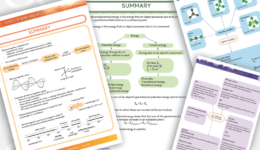
A useful summary brings together the key content, definitions and formulae. Bullet points help learners revise key facts; mind maps show how concepts are connected. Both can be useful revision tools.

Check that the summary is consistent with the chapter. Where prescribed definitions are required, the wording should match those definitions and include all the essential concepts.
6. Do the answer spaces suit the questions?
In books that learners write in, answer space is part of usability. A calculation that has to fit into two lines can make a learner doubt a correct method. Too much space for a short answer can, in turn, create the impression that something is missing.

Check whether the space provided suits the expected answer and mark allocation. Is there room for intermediate steps, a full explanation or a clear sketch?
7. Is the layout uncluttered and easy to read?
Pay attention to font size, contrast, headings and the space around text and illustrations. Can learners find their way around easily? Are the details of a diagram clear when the book lies open on a desk?
Adequate white space is not wasted paper. A well-organised page helps learners distinguish between the explanation, example and exercise, and approach the content in manageable sections.
8. Is the memorandum consistent with the learner’s book?
Check question numbers, page references, answers and mark allocations. The terminology and methods used in the memorandum should match the explanations and examples in the learner’s book.
Ask how the answers have been checked and moderated. Also consider whether the teacher’s guide highlights common misconceptions and offers useful guidance on difficult content. This support matters when a lesson does not go as planned.
9. What does the complete package cost?
Compare the costs of the learner’s book, teacher’s guide, any included digital access and delivery.
Consider the durability of the binding and whether the book can be reused. Ask how repeat orders and support are handled. Service remains important after the first order has been delivered.
10. Have your teachers worked through a sample chapter?
Ask the teachers who will use the books to evaluate the same topic across the different options. Read the explanation, complete the exercises, look at the answer spaces and check the memorandum.
Where possible, give a few learners a page or two to try. Their questions may reveal where an explanation, instruction or layout still creates obstacles.
Before placing an order, work through a complete lesson from a sample chapter. Read the explanation, complete the exercises and check the memorandum. That is where you will see whether the book supports your teaching and helps learners develop understanding and confidence.
About Doc Scientia
Doc Scientia develops science resources in Afrikaans and English for learners and teachers. The range includes textbooks, combined textbooks and workbooks, teacher’s guides, answer books and supplementary learning resources.
Visit www.docscientia.co.za to download free samples of our books and resources.
Checklist before you order
Use ten practical questions to compare science textbooks before your school places an order.
☐ Does the book cover the prescribed curriculum?
☐ Are difficult concepts explained step by step?
☐ Do the exercises build towards the required assessment standard?
☐ Is the content accurate and is there a process for corrections?
☐ Are the summaries useful and consistent?
☐ Is there enough appropriate answer space where needed?
☐ Is the layout uncluttered and easy to read?
☐ Is the memorandum consistent with the learner’s book?
☐ Are the full cost and available support clear?
☐ Have teachers worked through a sample chapter themselves?
Frequently asked questions:
What does the term “eTextbook” mean?
An eTextbook is a digital version of a textbook that can be read on a computer, tablet, smartphone or e-reader. It may be a simple electronic copy of a printed book, usually in PDF or ePub format, or an interactive resource with features such as videos, animations, self-marking quizzes, hyperlinks and search tools.
Before choosing an eTextbook, check how learners will access it, whether it can be used offline, which devices it supports and whether there are any ongoing licence or data costs.
How are textbooks evolving with digital learning in South Africa?
In South Africa, printed textbooks remain essential, particularly because access to devices, reliable internet connectivity and affordable data varies between schools and communities. At the same time, many publishers are adding digital resources to support classroom teaching and independent learning.
These may include downloadable worksheets, videos, interactive activities, online assessments and teacher resources. The most useful approach is often a blended one: a reliable printed textbook supported by digital materials that add value without making learning dependent on constant internet access.
How can I identify a reliable source for purchasing textbooks online?
Start with the publisher’s official website or an established educational supplier. A reliable seller should provide clear product information, including the title, edition, ISBN, grade, subject, language and price. It should also clearly state delivery costs, payment options, return procedures and contact details.
For school orders, ask whether the supplier can provide quotations, invoices and support for repeat orders. It is also wise to check customer reviews, confirm that you are buying the correct edition, and be cautious of prices that seem unusually low.
What are some common challenges learners face with traditional textbooks?
Traditional textbooks can be difficult to use if the language is unnecessarily complex, explanations skip important steps or examples do not show how to apply a method. Learners may also struggle when the layout is crowded, diagrams are unclear or there is too little space to complete activities and calculations.
A textbook can also become less effective if it does not include enough practice at different levels, meaningful summaries for revision or a memorandum that matches the methods used in the learner’s book. In these cases, teachers often need to provide extra explanations, exercises and resources.
What are the advantages and disadvantages of using textbooks in the classroom?
Textbooks give teachers and learners a structured, reliable foundation for teaching and learning. A good textbook is aligned with the curriculum, presents content in a logical sequence and provides explanations, examples, exercises and revision support in one place. Printed books are also accessible without electricity, devices or internet access, and learners can return to them whenever they need to revise.
However, textbooks are not equally effective. An inaccurate, poorly structured or outdated book can create confusion and add to a teacher’s workload. Printed textbooks may also be heavy, costly to replace and less flexible than digital resources when corrections or updates are needed. The best results come from choosing a high-quality textbook and using it alongside teacher guidance, discussion, practical activities and, where appropriate, carefully selected digital resources.