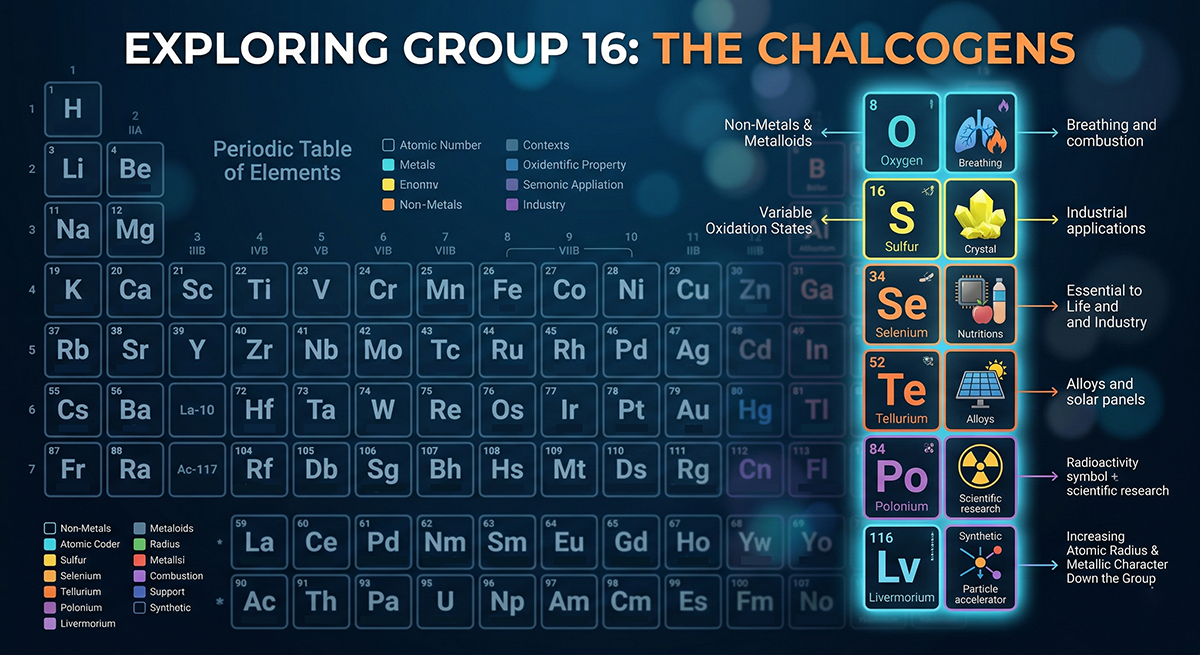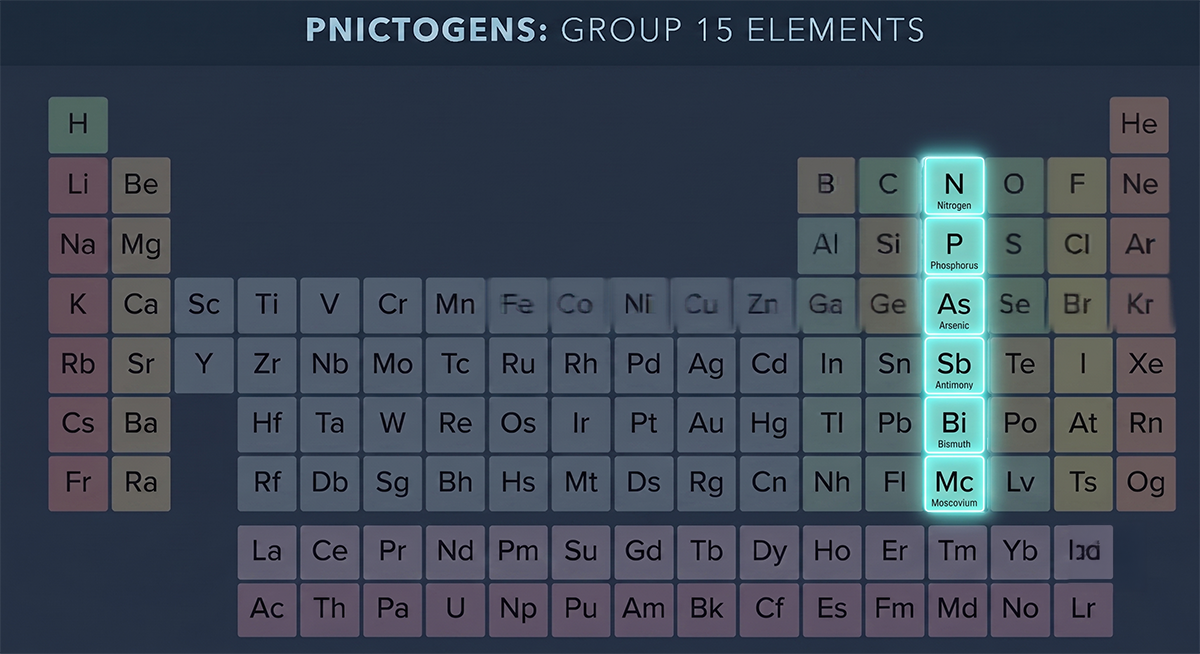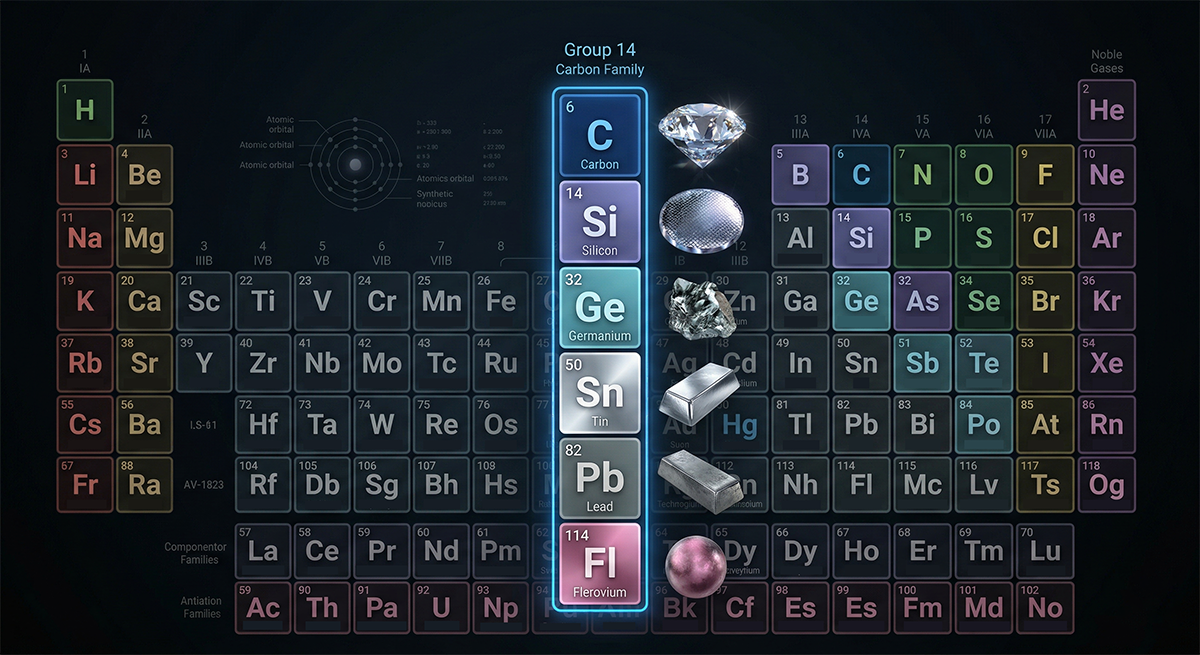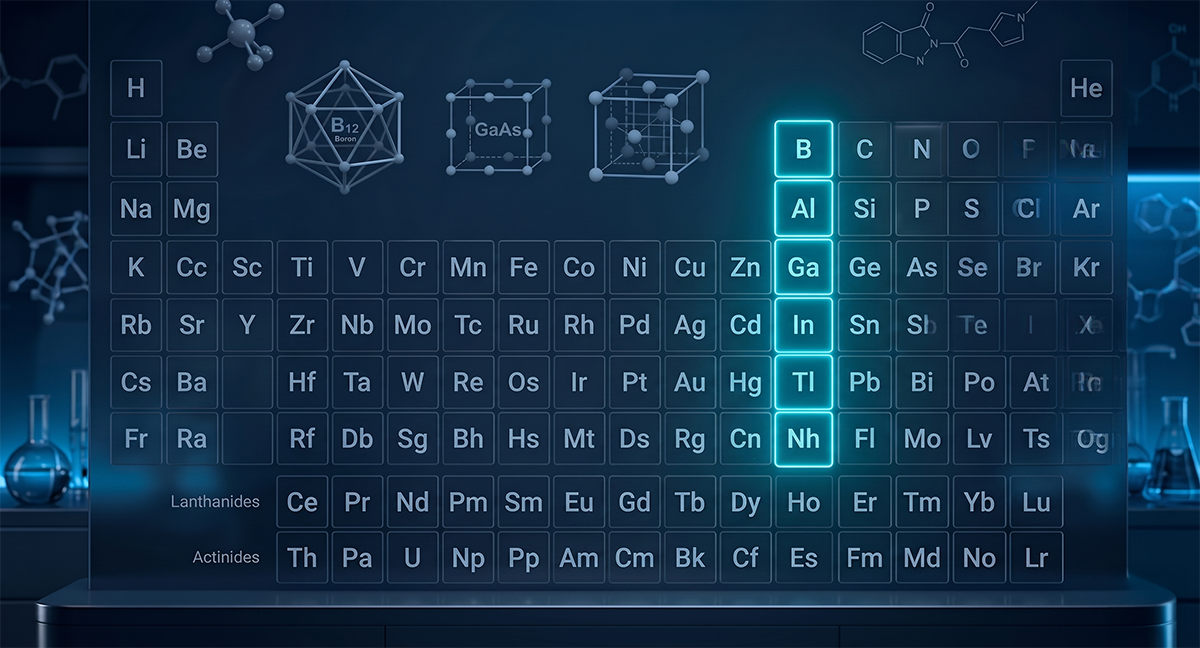

At the far right of the periodic table sits a group that behaves very differently from the rest.
Group 8 – better known as the noble gases – includes helium, neon, argon, krypton, xenon, and radon. Unlike most elements, these gases don’t actively seek reactions. They’re already stable.
That stability comes from a full outer electron shell. While other elements react to achieve this state, noble gases already have it. As a result, they tend to remain chemically inactive.
But “inactive” doesn’t mean unimportant. These elements play critical roles in lighting, medicine, industry, and advanced technology – often precisely because they don’t react.
Sometimes in chemistry, the most important thing you can do is… absolutely nothing. Watch our featured video, ‘The Useful Art of Doing Nothing,’ and discover the secrets of the Noble Gases.
Key Highlights
- Group 8 includes helium (He), neon (Ne), argon (Ar), krypton (Kr), xenon (Xe), and radon (Rn)
- These elements have full outer electron shells, making them highly stable
- They are extremely unreactive and typically have an oxidation state of zero
- All are colourless, odourless gases under standard conditions
- Noble gases are widely used in lighting, welding, cryogenics, and medical applications
- Radon is radioactive and poses health risks in high concentrations
What defines Group 8 elements?
The defining feature of noble gases is their electron configuration.
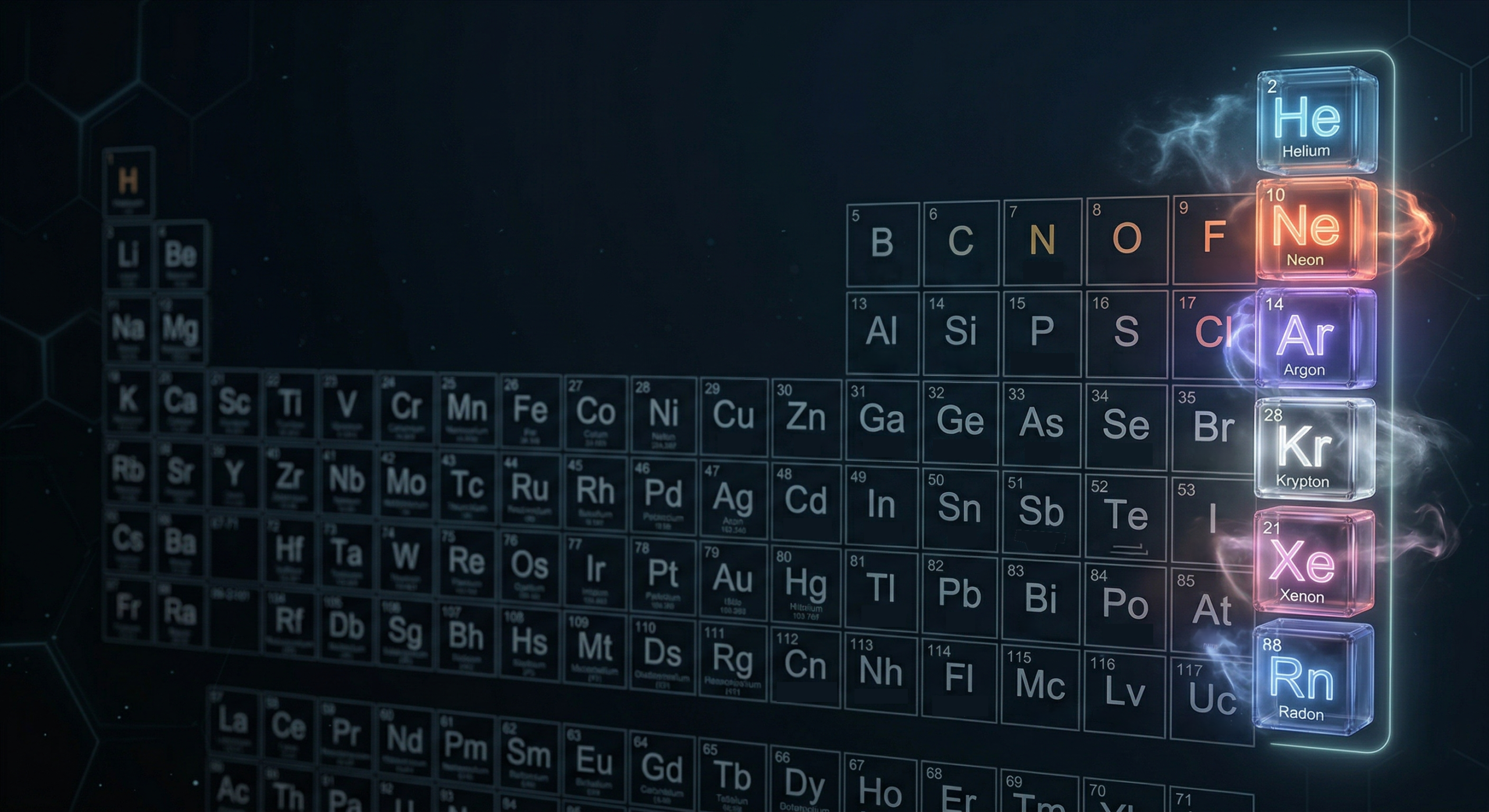
Each element has a complete outer shell:
- Helium has 2 electrons (a full first shell)
- All others have 8 electrons (a full octet)
This makes them energetically stable. They don’t need to gain, lose, or share electrons – so they rarely react.
This stability is what gives them their name: “noble,” meaning unreactive or chemically aloof.
Trends across the group
As you move down Group 8, several predictable trends appear:
- Atomic size increases
- Density increases significantly
- Boiling and melting points increase
- Ionisation energy decreases
- Reactivity slightly increases (but remains very low overall)
Heavier noble gases like xenon and radon can form compounds under extreme conditions, unlike helium or neon.
Helium: lightweight and extreme
Helium is the lightest noble gas – and one of the most unusual elements.
It has the lowest boiling point of any element and remains liquid close to absolute zero. At very low temperatures, it becomes a superfluid, flowing without resistance.
Common uses of helium:
- Balloons and airships
- Cryogenics (cooling MRI machines)
- Scientific research
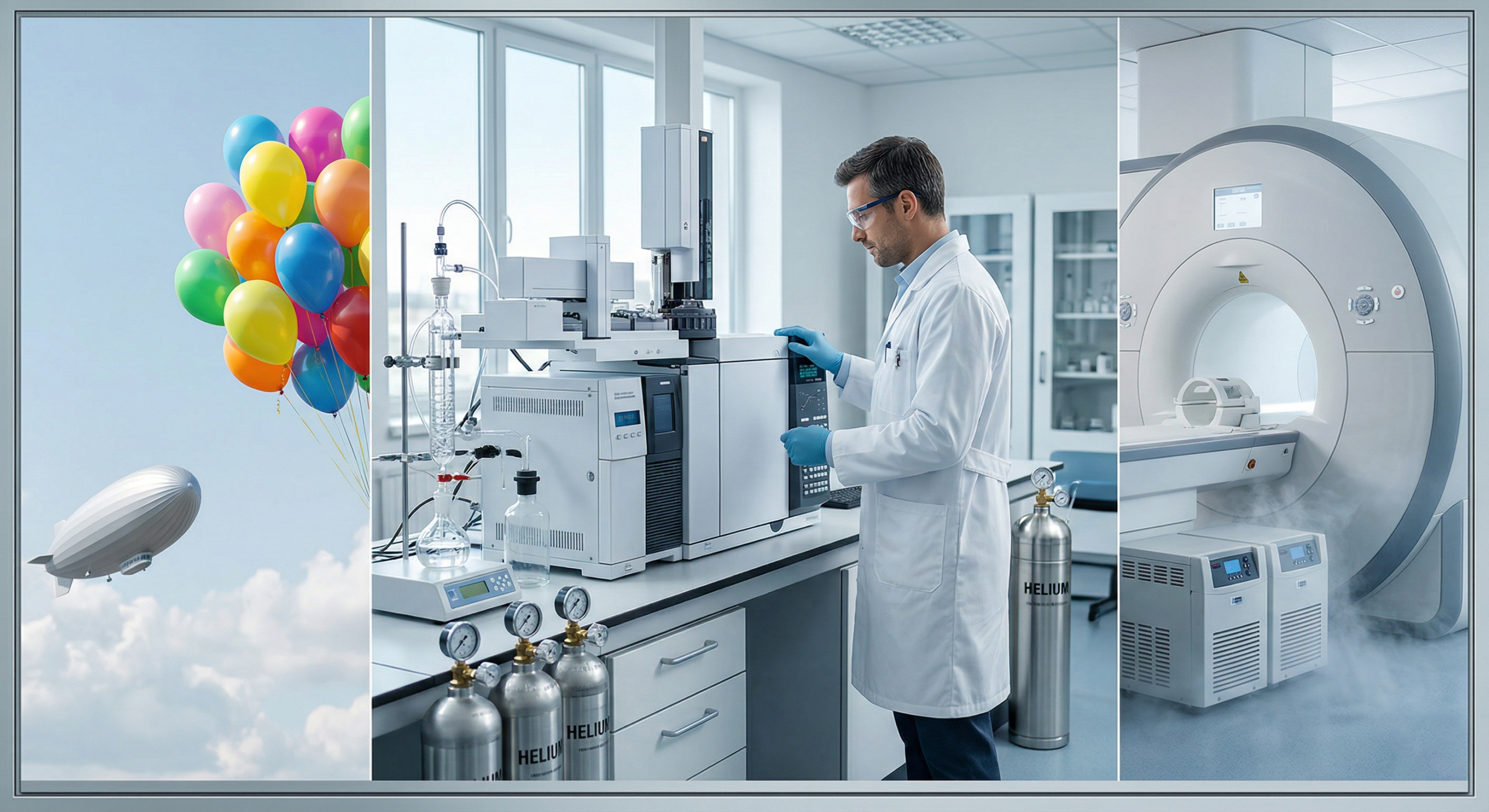
Unlike other elements, helium escapes Earth’s gravity easily, making it a limited resource.
Neon: bright and recognisable
Neon is best known for its use in lighting.
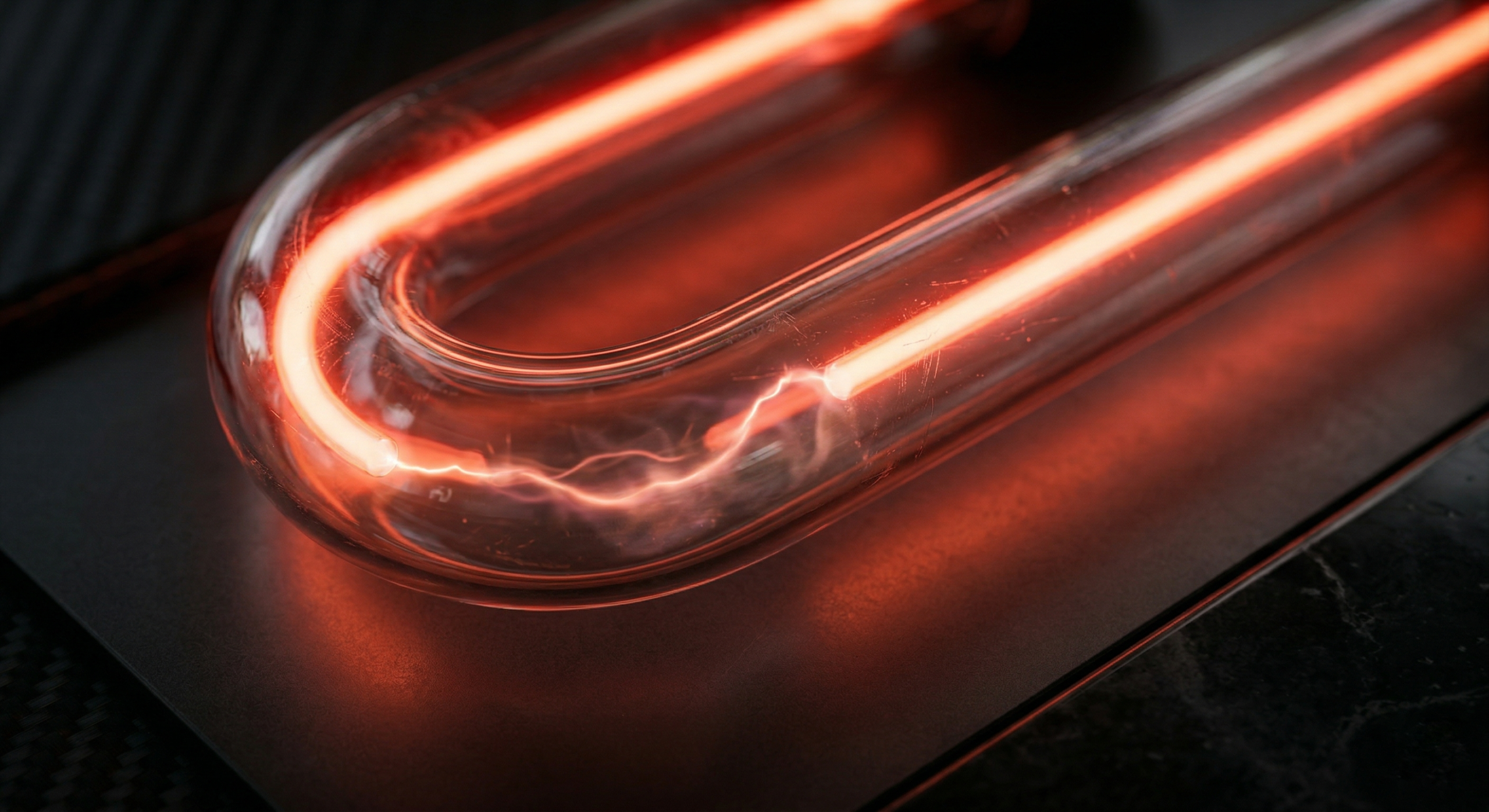
When an electric current passes through neon gas, it emits a bright red-orange glow. This property made neon lighting iconic in signage and displays.
Where neon is used:
- Advertising signs
- Indicators and display tubes
- High-voltage equipment
Despite its visibility in signs, neon is actually quite rare in Earth’s atmosphere.
Argon: abundant and practical
Argon is the most abundant noble gas in the atmosphere.
Its key advantage is inertness – it doesn’t react even at high temperatures, making it ideal for protective environments.
Key uses of argon:
- Shielding gas in welding
- Filling light bulbs to prevent filament damage
- Protective atmospheres in manufacturing

It’s widely used because it’s both stable and relatively easy to obtain.
Krypton and xenon: specialised performance
Krypton and xenon are rarer but highly useful in advanced applications.
Krypton is used in high-performance lighting and photographic flashes, while xenon plays a major role in modern technology.
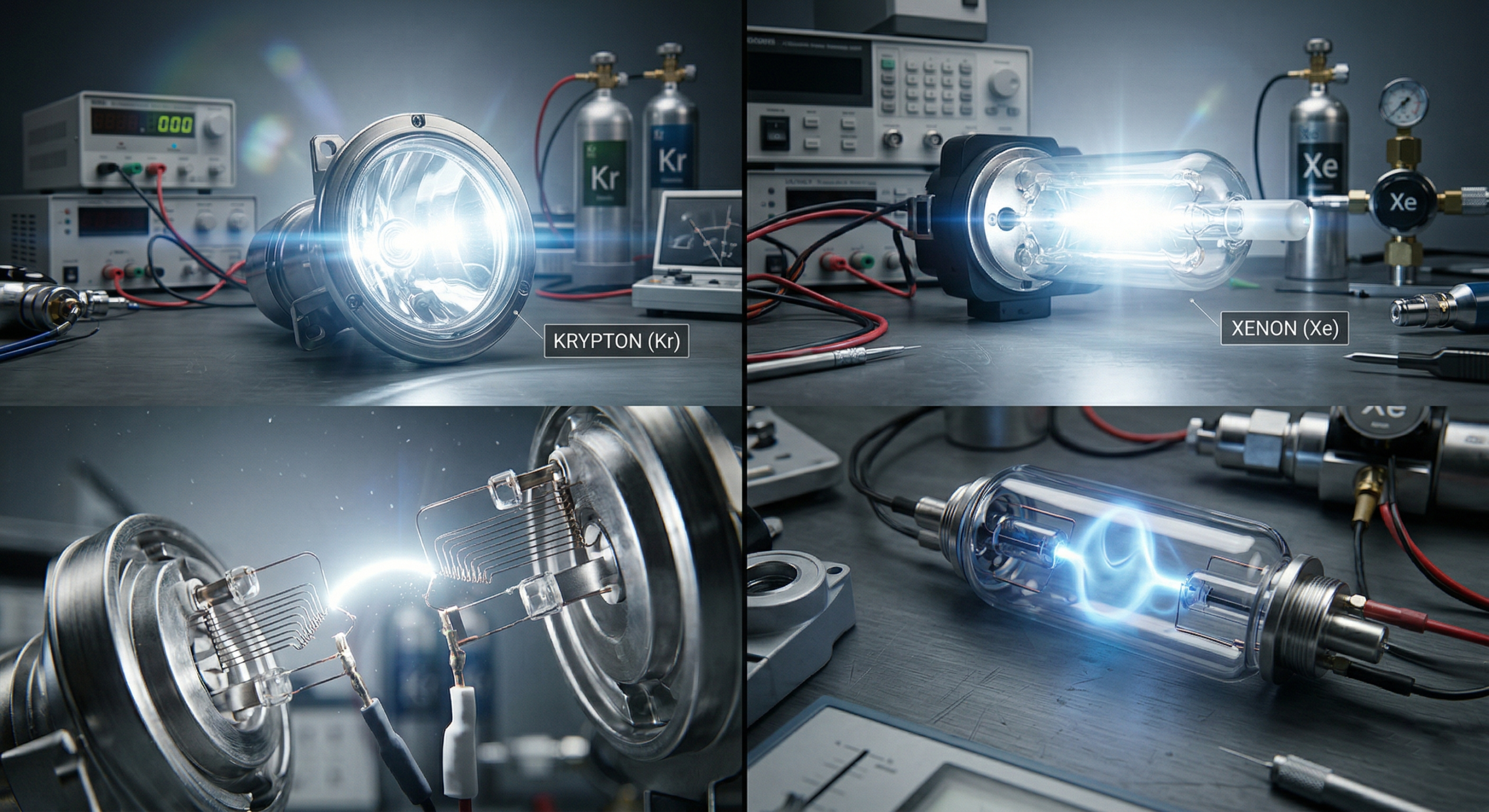
Applications include:
- High-intensity lamps and flash systems
- Laser technologies
- Xenon-based anaesthesia
- Ion propulsion in spacecraft
Xenon is also one of the few noble gases that can form stable compounds.
Radon: radioactive and hazardous
Radon is very different from the rest of the group.
It is radioactive and formed naturally from the decay of uranium in the Earth’s crust. Because it is a gas, it can accumulate in enclosed spaces like homes.
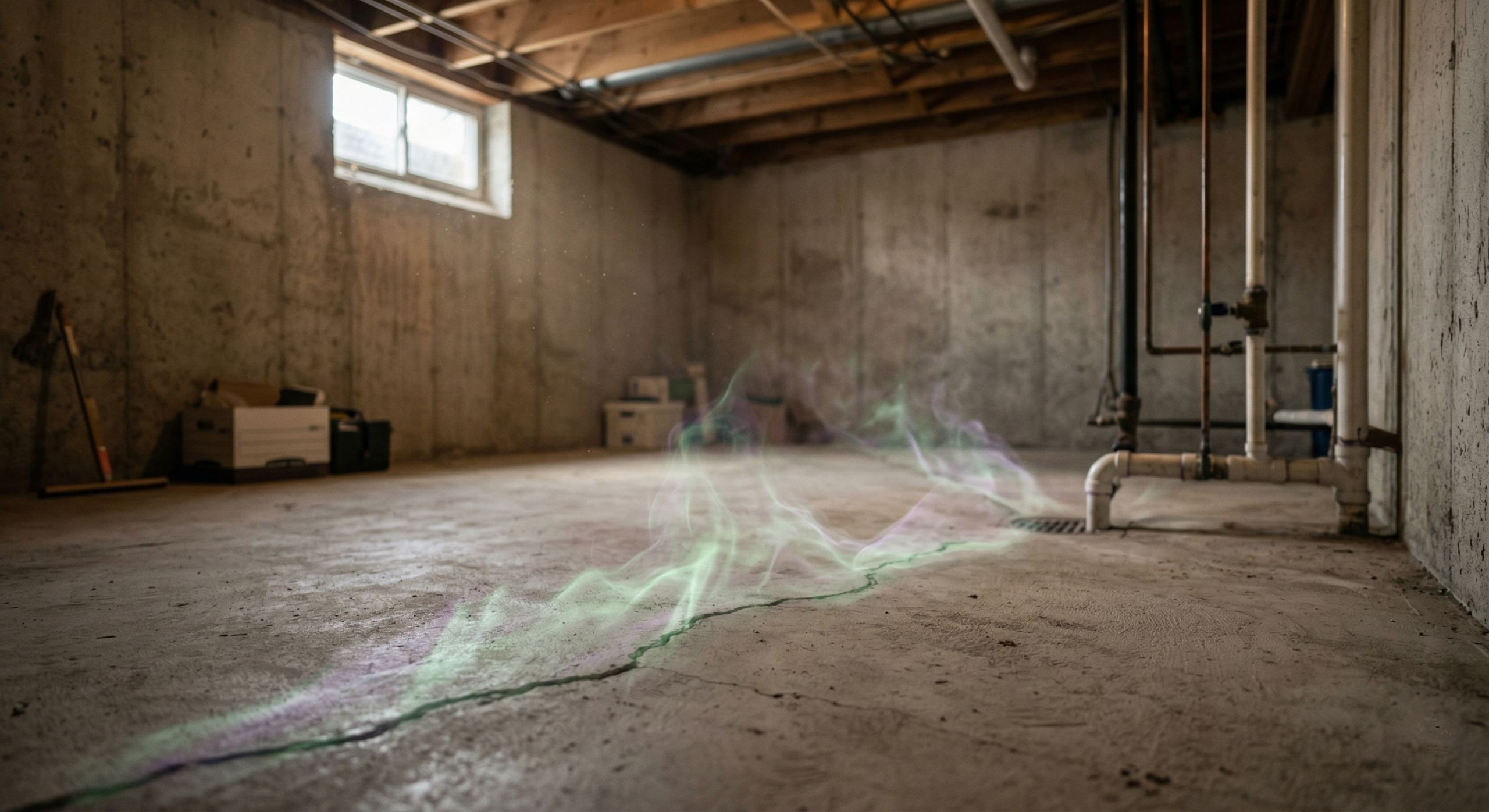
Key points about radon:
- It is a health hazard linked to lung cancer
- It has no major commercial applications
- It is mainly studied in environmental and nuclear science
Unlike other noble gases, radon’s risks outweigh its practical uses.
Physical and chemical properties
Noble gases share a consistent set of properties:
- Colourless, odourless, and tasteless
- Exist as single atoms (monatomic gases)
- Very low boiling and melting points
- Weak intermolecular forces
- High ionisation energies
Chemically, they are extremely stable. Most do not form compounds under normal conditions.
Exceptions to inert behaviour
For a long time, noble gases were thought to be completely inert.
That changed in 1962, when the first xenon compound was created. Since then, several compounds have been discovered, mainly involving xenon and fluorine.
Examples include:
- XeF₂ (xenon difluoride)
- XeF₄ (xenon tetrafluoride)
- KrF₂ (krypton difluoride)
These compounds form only under specific conditions and are not common in nature.
Natural occurrence and extraction
Most noble gases are obtained from the atmosphere:
- Argon, neon, krypton, and xenon → extracted from liquefied air
- Helium → extracted from natural gas deposits
- Radon → produced through radioactive decay
Extraction typically involves fractional distillation, separating gases based on boiling points.
Industrial and real-world uses
Noble gases are essential in modern technology and industry:
- Helium enables cryogenic cooling
- Neon and krypton provide lighting solutions
- Argon protects materials during manufacturing
- Xenon supports advanced medical and space technologies
Their lack of reactivity is what makes them so valuable – they don’t interfere with processes.
Why group 8 matters
Group 8 elements don’t react, don’t combine easily, and don’t behave like most of the periodic table.
And that’s exactly why they matter.
Their stability allows them to create safe environments, power technologies, and support scientific breakthroughs. While other elements drive reactions, noble gases make control possible.
Sometimes, the most important role in chemistry is not reacting at all.
Frequently asked questions
Why are noble gases unreactive?
Because they have full outer electron shells, making them already stable.
Do noble gases form compounds?
Most do not, but heavier ones like xenon and krypton can under specific conditions.
What are noble gases used for?
They are used in lighting, welding, medical imaging, cryogenics, and electronics.
Is radon dangerous?
Yes. It is radioactive and can pose serious health risks if it accumulates indoors.